Types of Scissors: A Guide to Every Kind
- First published
- Filed under
- Kinds of scissors
Scissors are grouped by what they cut, what they are made of and which hand they suit: kitchen, fabric and sewing, hair, garden, embroidery, craft, kids, left-handed and electric. Shears is the older word for larger scissors. Choose by the job and material, keep each pair to its own task, and look after the pivot and edge.
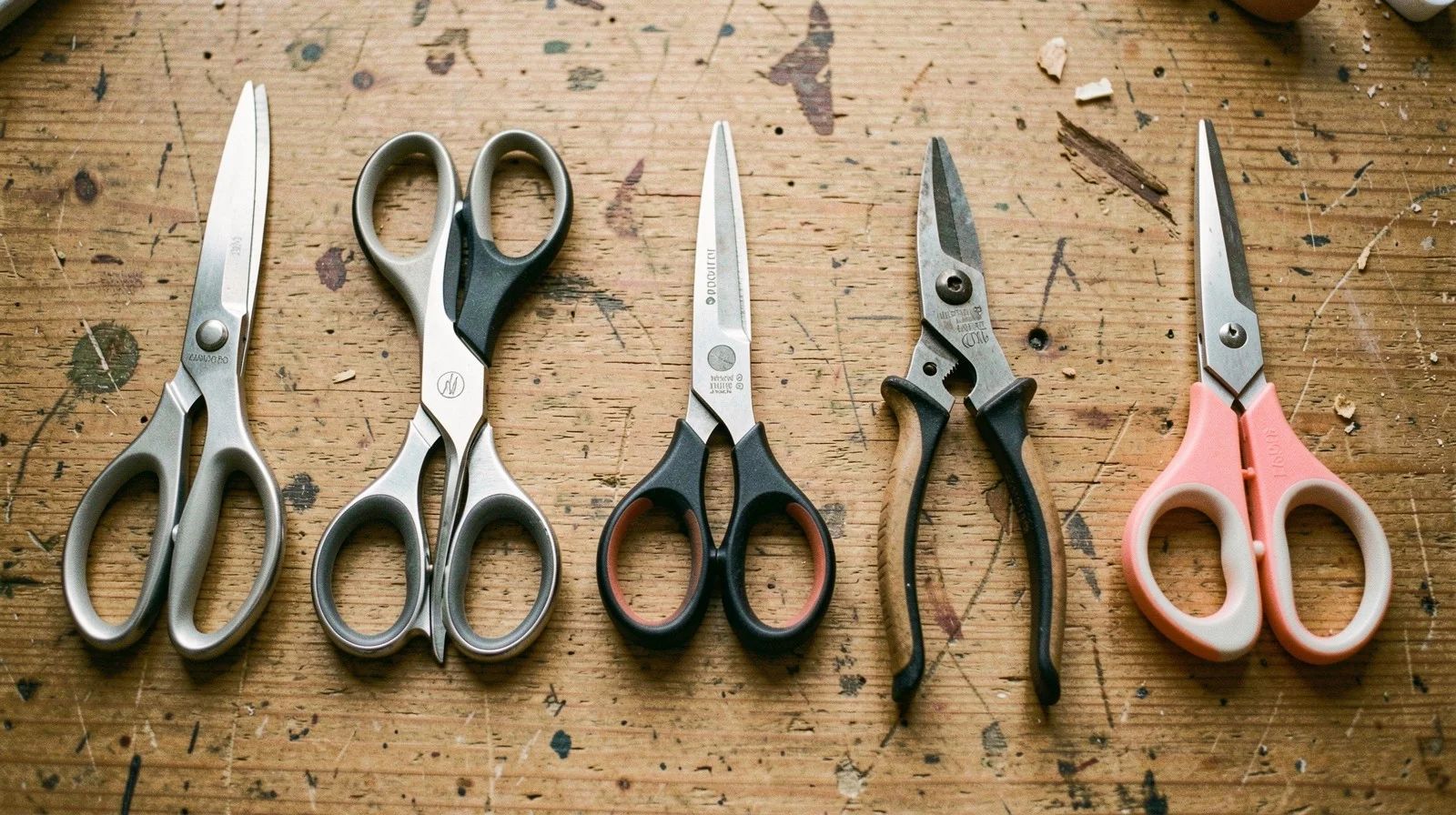
General information; follow the maker’s instructions. All scissors are sharp tools: cut away from yourself and store them closed.
The main types of scissors are grouped by the job they do: kitchen, fabric and sewing, hair, garden, embroidery, craft, kids, left-handed and electric. This hub explains how the groups differ and links to a guide for each. If you want a quick recommendation by task and material, try the scissor and shear type picker.
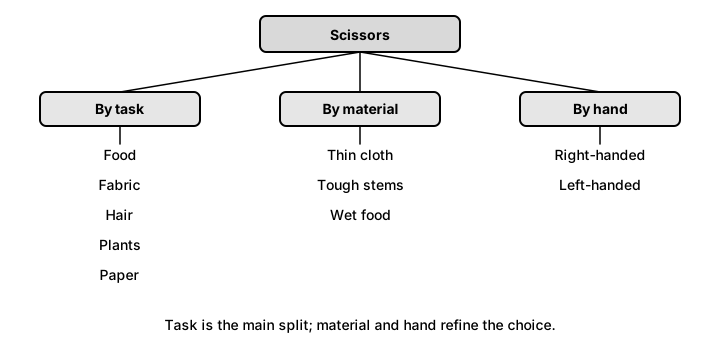
How scissors are grouped
Scissors are grouped by task, by material and by hand. Task is the main split: food, fabric, hair, plants, paper. Material matters because thin cloth, tough stems and wet food stress an edge differently. Handedness decides which blade sits on top and whether the handles are shaped for a left or right grip, and our left-handed scissors guide covers it.
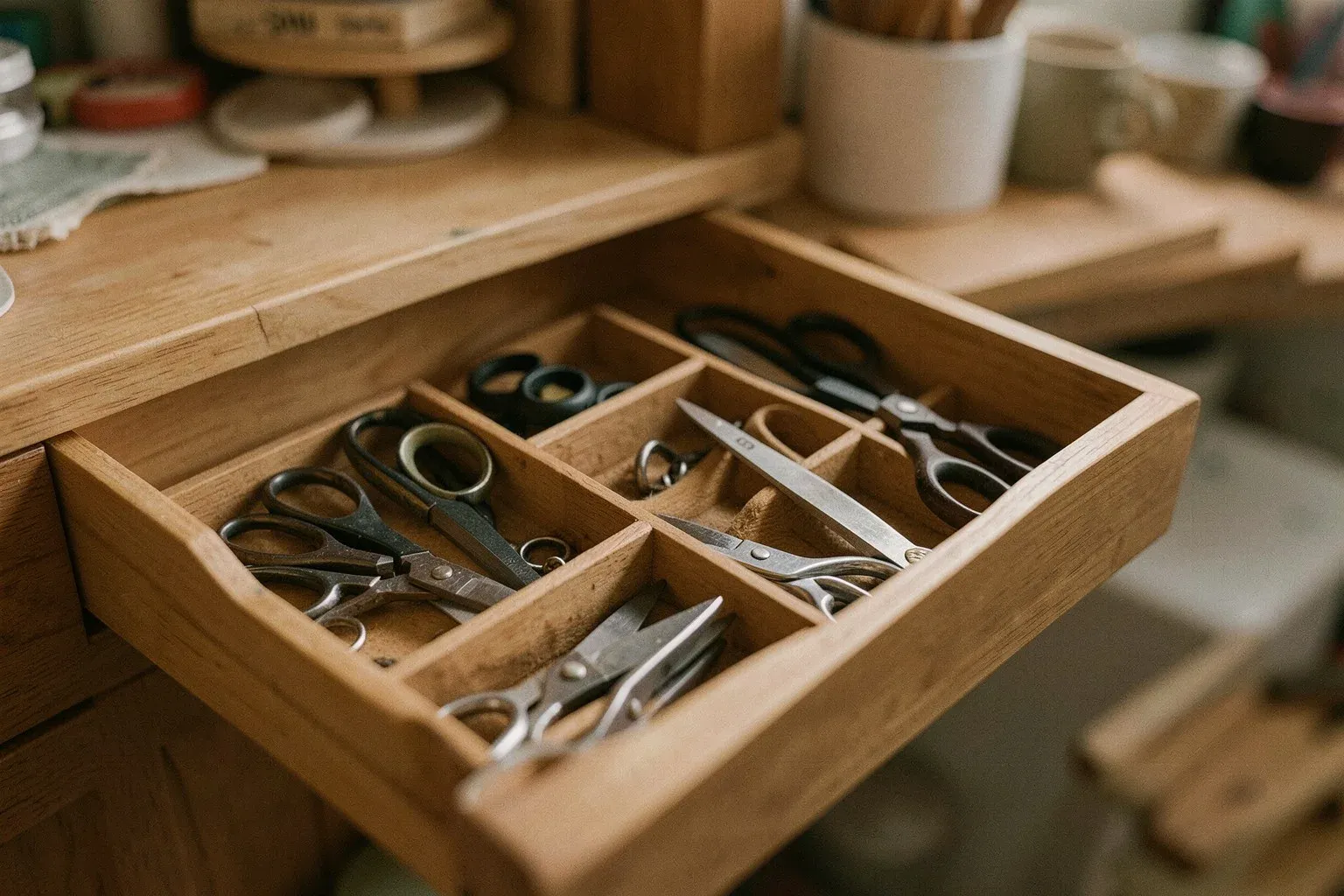
Scissors, shears and snips
The words overlap. A standard dictionary defines shears as large scissors, for tasks such as cutting fabric or jointing poultry, and also as scissor-like tools with flat blades for trimming hedges. In practice people use “shears” for larger or heavy-duty pairs, “scissors” for smaller ones and sometimes “snips” for compact cutters. Maryland Extension uses “pruning shears” for hedge clippers, while many gardeners use the term for hand pruners. When a page matters, read the description and capacity, not just the name.
All the kinds
- Kitchen scissors and shears. Cut herbs, trim food and open packaging. Some come apart for cleaning. See kitchen scissors and kitchen shears vs kitchen scissors.
- Fabric and sewing scissors. Made for cloth and thread; our fabric scissors guide covers choosing a pair.
- Hair and barber shears. Specialist tools whose care is set by the maker. Our barber scissors and shears guide explains terms and sizes. This site covers the tools only, not haircutting.
- Garden shears and pruners. Bypass hand pruners cut live stems; loppers and saws handle bigger growth. See the garden pruning page.
- Embroidery and detail scissors. Small, fine-pointed pairs for thread and close work.
- Craft and paper scissors. General pairs for paper and light materials.
- Kids scissors. Pairs made for small hands, used with an adult nearby (see below).
- Left-handed scissors. Built for the left hand. See left-handed scissors.
- Electric scissors. Cordless or corded cutters for soft materials. See electric scissors.
Pick a type
Start with the material, then the job, then your hand. Our scissor and shear type picker turns those answers into a short list of kinds, not products. Remember that one maker’s cordless electric pair is limited to flexible soft materials up to 6 mm thick, so check limits before assuming a tool suits a job.
Children and scissors
For children, the CPSC Art and Craft Safety Guide says there is no substitute for direct supervision. Keep adult scissors out of reach and teach safe carrying and storage.
Keeping any pair working
Wipe blades after use, oil the pivot, sharpen when the cut turns ragged and store closed. Scissor safety and care has the routine, and how to sharpen scissors covers edges. Match each pair to one material, as the fabric scissors and garden pruners guides explain.
Common mismatches to avoid
- Fabric scissors used on paper or tape. Keep a separate pair for those jobs so the cloth pair stays true.
- Kitchen scissors used on raw meat and then on herbs without washing. The CDC says to wash utensils and cutting boards with hot, soapy water after preparing each food item.
- Hand pruners on stems thicker than their capacity. Maryland Extension says this damages the plant and dulls or ruins the tool.
- Electric scissors on materials outside the maker’s stated range.
- A right-handed pair used in the left hand when a left-handed pair is available; see left-handed scissors.
| Kind | Typical job | Watch for | Guide |
|---|---|---|---|
| Kitchen scissors and shears | Herbs, packaging, trimming food | Wash promptly; keep separate from raw-meat tasks | Kitchen scissors |
| Fabric and sewing scissors | Cloth and thread | Keep for fabric only so the edge stays true | Fabric scissors |
| Hair and barber shears | Hair, explained here as tools only | Care and disinfection per maker | Barber scissors and shears |
| Pruning shears | Plant stems | Bypass for live wood; capacity limits | Pruning shears |
| Left-handed scissors | Any task, built for the left hand | True left-handed blades vs symmetrical handles | Left-handed scissors |
| Electric scissors | Soft materials, cordless or corded | Battery and moving-blade safety | Electric scissors |
Pick by task first, then by material, then by hand. If one pair must do many things, keep it to light, clean jobs and keep specialist pairs for their own material.
All Kinds Of Scissors guides
- Electric Scissors: Types, Uses and Safety
What electric scissors are, corded versus cordless types, what materials they suit, battery and moving-blade safety, care and blade changes.
- Kitchen Scissors: What They Do and How to Care for Them
What kitchen scissors are used for, features such as take-apart blades, dishwasher questions and food-safety cleaning after raw meat or poultry.
- Kitchen Shears vs Kitchen Scissors: Is There a Difference?
Kitchen shears and kitchen scissors overlap in meaning. Learn how the words are used, what features to look for and which term to search or use.
- Left-Handed Scissors: How They Work and How to Choose
How left-handed scissors differ from right-handed pairs, true left-handed versus symmetrical handles, and how to choose for adults, fabric and garden.
- Scissor Safety and Care: Cleaning, Oiling and Storing
Safe handling, cleaning by material, oiling the pivot, adjusting tension, storing and teaching children to use scissors, with maker and CPSC sources.
FAQ
What is the difference between scissors and shears?
There is no hard line. A standard dictionary defines shears as large scissors, for tasks such as cutting fabric or jointing poultry, and also lists hedge shears with flat blades. In everyday use, shears often means larger pairs or pairs with a heavy-duty or specialist job, while scissors suits smaller, lighter work. Check the maker's description rather than the name alone.
How many types of scissors are there?
There is no official count, because the types are grouped by job. Common groups are kitchen, fabric and sewing, hair and barber, garden and pruning, embroidery, craft and paper, kids, left-handed and electric. Within each, makers add variations such as serrated edges, take-apart blades or offset handles, so use the groups here as a map, not a complete list.
Can I use one pair of scissors for everything?
You can for light, clean jobs, but one pair is a compromise. OSHA says scissors must be sharp, so a pair that is used for many jobs will need sharpening sooner. Keep fabric scissors for fabric and keep garden or kitchen pairs to their own jobs, so each stays sharp and you avoid carrying food residue or plant disease from one job to another.
Are left-handed scissors different from right-handed ones?
Yes, a true left-handed pair is made for the left hand, rather than being a right-handed pair with a different handle. Some makers describe true left-handed shears with offset handles. Some scissors instead use symmetrical handles. Our left-handed scissors guide explains how to tell the difference and how to choose.
Are electric scissors worth considering?
They suit repeated cutting of soft materials, but they add battery and moving-blade safety rules. One maker's sheet limits its cordless pair to flexible soft materials up to 6 mm thick. Manual scissors need no charging and no guard. Read the maker's safety instructions before you choose, and see our electric scissors page for the basics.
How should I look after any kind of scissors?
Wipe the blades after use, keep the pivot lightly oiled, store them closed in a dry place and keep them to their own material. A shear maker's shear care guide says to wipe blades after every use and oil the pivot. Our scissor safety and care page sets out the routine in detail.
Sources
- Dictionary.com (Collins English Dictionary): shears (dictionary.com)
- University of Maryland Extension: Pruning Tools (extension.umd.edu)
- Powertec: 3.6V Cordless Scissors instruction sheet (ESS3600) (powertecproducts.com)
- OSHA: Hand and Power Tools (publication 3080) (osha.gov)
- CDC: Food safety, preventing cross-contamination (cdc.gov)
- Kai USA: KASHO shear care instructions (kasho.kaiusa.com)
- CPSC: Art and Craft Safety Guide (Pub. 5015) (cpsc.gov)
- Kai USA: left-handed shear product page (kasho.kaiusa.com)
- OLFA: Left-handed and ergonomic cutting (olfa.com)
Keep reading
- Kitchen Scissors: What They Do and How to Care for Them
What kitchen scissors are used for, features such as take-apart blades, dishwasher questions and food-safety cleaning after raw meat or poultry.
- Left-Handed Scissors: How They Work and How to Choose
How left-handed scissors differ from right-handed pairs, true left-handed versus symmetrical handles, and how to choose for adults, fabric and garden.
- Electric Scissors: Types, Uses and Safety
What electric scissors are, corded versus cordless types, what materials they suit, battery and moving-blade safety, care and blade changes.
- Kitchen Shears vs Kitchen Scissors: Is There a Difference?
Kitchen shears and kitchen scissors overlap in meaning. Learn how the words are used, what features to look for and which term to search or use.
- Scissor Safety and Care: Cleaning, Oiling and Storing
Safe handling, cleaning by material, oiling the pivot, adjusting tension, storing and teaching children to use scissors, with maker and CPSC sources.