Kitchen Scissors: What They Do and How to Care for Them
- Review by
- Edge & Pivot Editorial Team
- Last checked
- First published
- Filed under
- Kinds of scissors
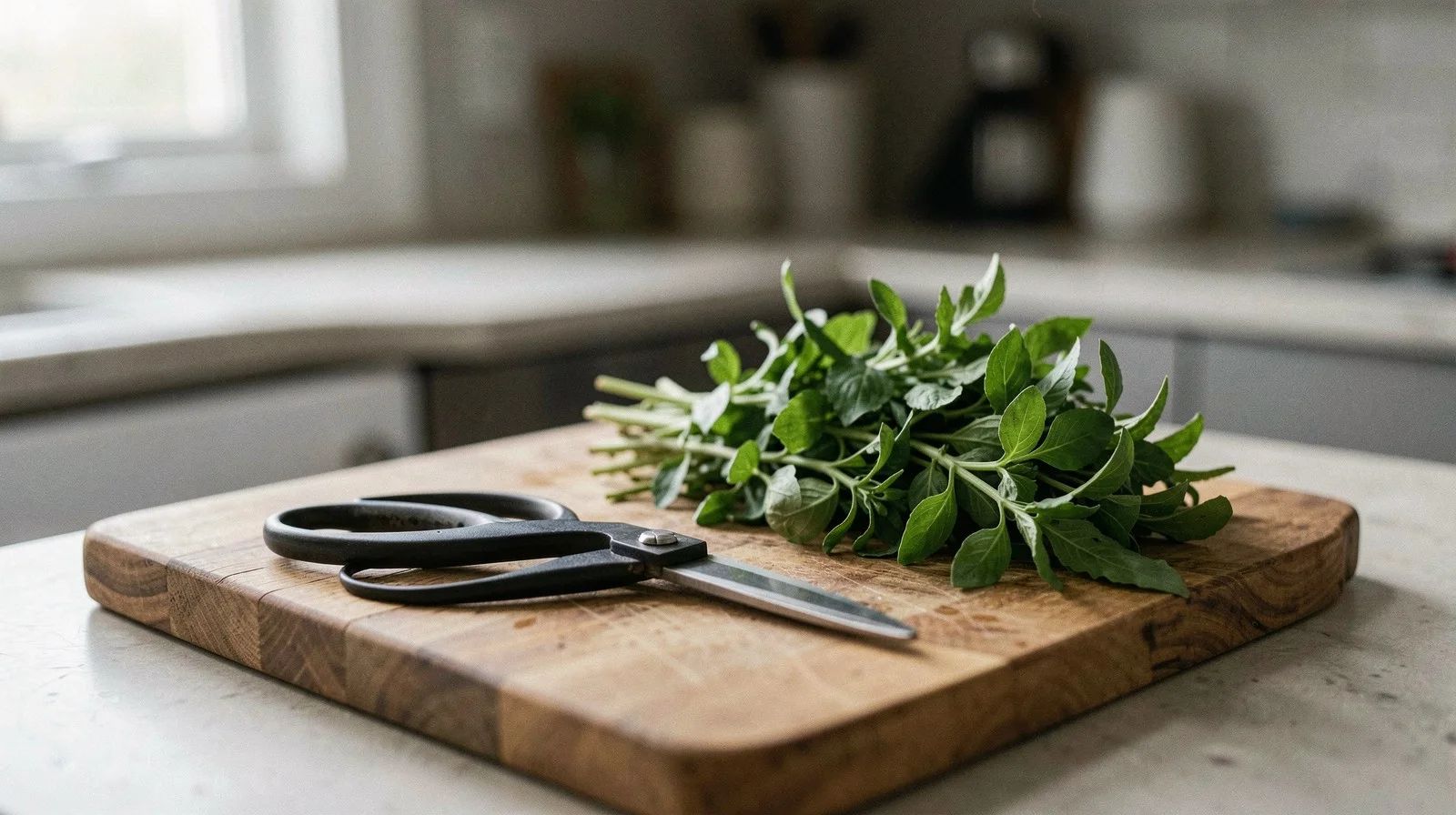
Kitchen scissors are strong scissors kept for food tasks such as snipping herbs, trimming and opening packaging. Some pairs come apart so the blades can be washed separately. Wash them in hot, soapy water after each food item, keep raw-meat use separate from ready-to-eat food, dry them fully and check the maker's page before using a dishwasher.
General information, not professional advice. Kitchen scissors are sharp, and food safety matters when they touch raw meat. Follow the maker’s instructions and your local health authority’s guidance.
Kitchen scissors are sturdy scissors used for food: snipping herbs, trimming fat or fish fins, cutting packaging and breaking down small items. They are one of the kinds covered in our guide to every kind of scissors. The key habit is to treat them like a kitchen knife: clean them after each job and keep them for food.
What kitchen scissors are used for
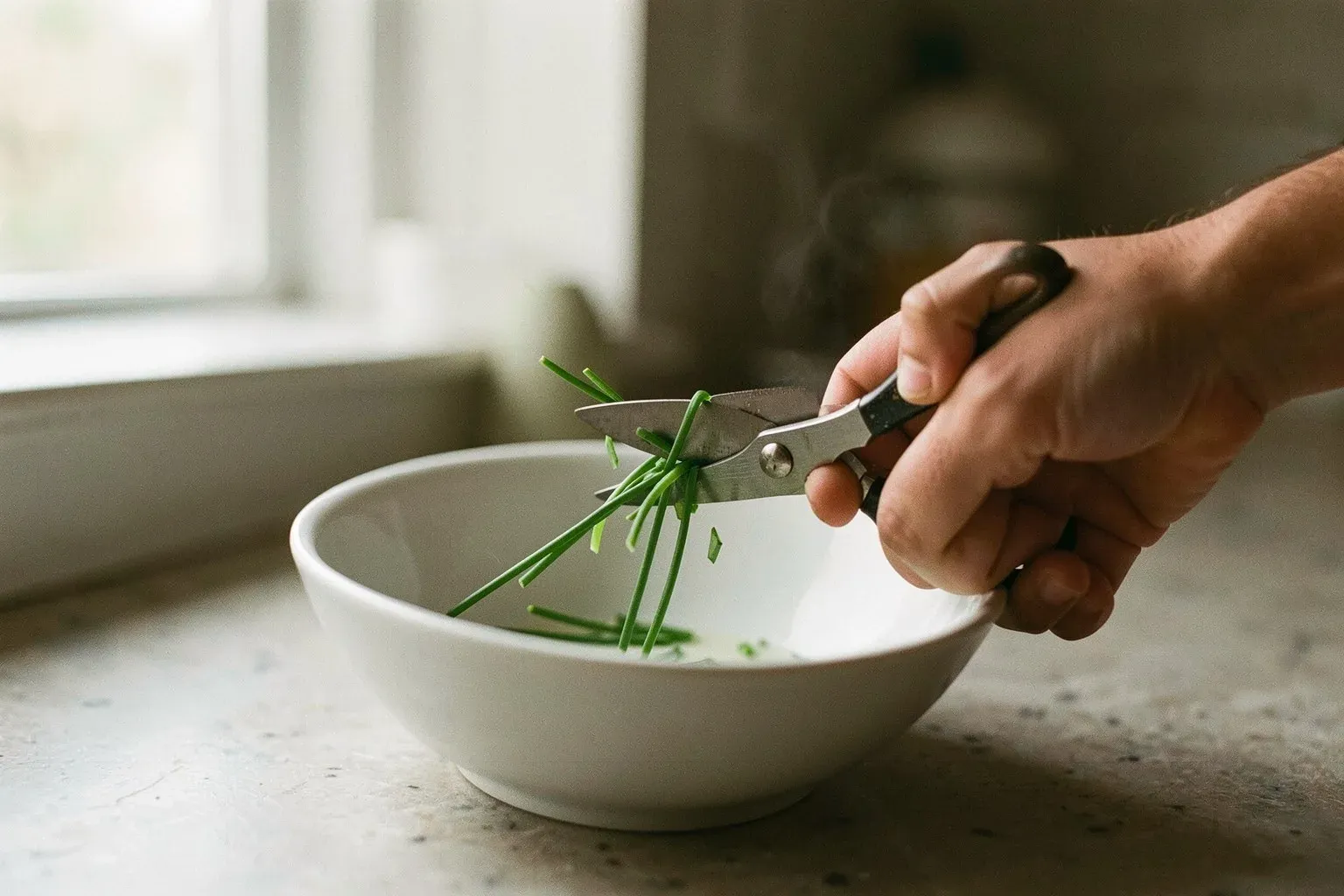
Common jobs are herbs, spring onions, bacon rind, packaging, and trimming. A standard dictionary lists “jointing poultry” among the jobs that shears do, which is why some pairs are marketed as poultry shears. Check the maker’s description for what a specific pair is built to cut, and avoid hard bones unless it says so. Our page on how the two terms compare compares the two words.
Features you will see
- Take-apart blades. Some pairs separate at the pivot so both blades can be washed. A kitchen-shear maker describes lifting the top blade off after opening the blades.
- Serrated edges. Some blades are serrated to grip slippery food.
- Extra tools. Some pairs add a bottle opener or jar gripper in the handle. These are optional.
- Handle shape. Larger handles suit larger hands; left-handed pairs exist, as covered in left-handed scissors.
Material and dishwasher guidance
Follow the maker’s care page. A kitchen-shear maker describes its pair as dishwasher safe but recommends hand washing in warm, soapy water and drying thoroughly. That pattern, “allowed but hand washing preferred”, is common, so treat the dishwasher as a convenience, not a requirement. Dry every part and avoid leaving them wet.
Food-safety cleaning
Wash kitchen scissors in hot, soapy water after each food item. The CDC advises washing utensils, cutting boards and countertops this way after preparing each food item, and using one cutting board or plate for raw meat, poultry and seafood and a separate one for foods that will not be cooked. Apply the same rule to scissors.
- Open the pair fully, or take it apart if the design allows.
- Wash with hot, soapy water, getting into the pivot.
- Rinse and dry fully.
- Keep raw-meat scissors apart from the pair used on herbs or bread, or wash them between uses.
If someone in your household is high risk for food poisoning, your local health authority’s guidance is the place for advice.
Care and sharpening
A small amount of vegetable oil on the blades and pivot keeps the action smooth, as a kitchen-shear maker notes. Sharpen when the cut turns ragged: OSHA says knives and scissors must be sharp, because dull tools can cause more hazards than sharp ones. Methods differ for serrated and take-apart blades, so see how to sharpen scissors and the general routine in scissor safety and care.
Safe use
Cut away from yourself, keep your free hand behind the blades and close or sheath them before storing. Keep them out of reach of young children.
Choosing a pair for the kitchen
Pick on features, not the name. Check whether the blades come apart for washing, whether the handles suit your hand, whether the maker’s care page allows the dishwasher and which jobs the maker lists. Compare these across descriptions instead of trusting a headline. If you want a quick guide by task, try the scissor and shear type picker.
Common mistakes
- Leaving them wet. Dry fully after washing; the maker we cite recommends drying thoroughly.
- Using one pair for raw meat and everything else. Wash between tasks or keep two pairs.
- Cutting what the pair is not made for. If the maker does not list bones or hard shells, do not test them.
- Ignoring a loose or gritty pivot. Clean it and add a drop of oil; if it stays loose, ask the maker about adjustment or replacement.
- Storing loose in a drawer. Keep them closed or sheathed.
All Kinds Of Scissors guides
- Electric Scissors: Types, Uses and Safety
What electric scissors are, corded versus cordless types, what materials they suit, battery and moving-blade safety, care and blade changes.
- Kitchen Shears vs Kitchen Scissors: Is There a Difference?
Kitchen shears and kitchen scissors overlap in meaning. Learn how the words are used, what features to look for and which term to search or use.
- Left-Handed Scissors: How They Work and How to Choose
How left-handed scissors differ from right-handed pairs, true left-handed versus symmetrical handles, and how to choose for adults, fabric and garden.
- Scissor Safety and Care: Cleaning, Oiling and Storing
Safe handling, cleaning by material, oiling the pivot, adjusting tension, storing and teaching children to use scissors, with maker and CPSC sources.
- Types of Scissors: A Guide to Every Kind
A guide to the main types of scissors and shears, grouped by task, material and handedness, with how scissors differ from shears and snips.
FAQ
Can kitchen scissors go in the dishwasher?
It depends on the pair, so read the maker's care page. One maker describes its take-apart kitchen shears as dishwasher safe but recommends hand washing in warm, soapy water and drying thoroughly. Check the maker's page for your pair. If it comes apart, take it apart before washing and dry every part.
Can I use kitchen scissors on raw meat?
Many people do, but treat them like a knife. The CDC advises washing utensils with hot, soapy water after preparing each food item and keeping raw meat, poultry and seafood away from foods that will not be cooked. Wash the scissors, ideally taking them apart if they come apart, before they touch herbs, salad or bread.
How do I clean kitchen scissors properly?
Open the blades, and if the pair comes apart, separate the halves. Wash with hot, soapy water, paying attention to the pivot where food collects, then rinse and dry completely. A kitchen-shear maker's instructions say to open the blades and lift the top blade off to clean. The same maker says to occasionally wipe each blade and pivot bolt with a small amount of vegetable oil.
Do kitchen scissors need sharpening?
They can, because OSHA says scissors must be sharp as dull tools cause more hazards than sharp ones. Some pairs are serrated or take-apart, which affects how they should be sharpened. Check the maker's advice first, and see our guide on how to sharpen scissors for methods that suit different blade types. Stop if the edge is chipped.
Can I use kitchen scissors for other jobs, like paper or garden stems?
It is best not to. Food scissors should stay clean for food. The CDC's guidance is to wash utensils with hot, soapy water after preparing each food item, and a premium-scissor maker says cutting inappropriate materials can dull blades. Keep a separate pair for craft or garden use, and see our types of scissors guide for which pair suits which job.
How do I stop kitchen scissors rusting?
Dry them fully after washing, rather than leaving them wet in a rack or drawer. One kitchen-shear maker advises occasionally wiping each blade and pivot bolt with a small amount of vegetable oil. Avoid soaking. Store them closed or in their sheath in a dry place. If rust appears, wash and dry the pair and contact the maker for advice.
Sources
- CDC: Food safety, preventing cross-contamination and cleaning (cdc.gov)
- Cutco: Product care, Cooks' Tools (Super Shears) (cutco.com)
- OSHA: Hand and Power Tools (publication 3080) (osha.gov)
- Whiteley: How to Take Care of Premium Quality Scissors & Shears (whiteley.co.uk)
- Dictionary.com (Collins English Dictionary): shears (dictionary.com)
Keep reading
- Left-Handed Scissors: How They Work and How to Choose
How left-handed scissors differ from right-handed pairs, true left-handed versus symmetrical handles, and how to choose for adults, fabric and garden.
- Types of Scissors: A Guide to Every Kind
A guide to the main types of scissors and shears, grouped by task, material and handedness, with how scissors differ from shears and snips.
- Electric Scissors: Types, Uses and Safety
What electric scissors are, corded versus cordless types, what materials they suit, battery and moving-blade safety, care and blade changes.
- Kitchen Shears vs Kitchen Scissors: Is There a Difference?
Kitchen shears and kitchen scissors overlap in meaning. Learn how the words are used, what features to look for and which term to search or use.
- Scissor Safety and Care: Cleaning, Oiling and Storing
Safe handling, cleaning by material, oiling the pivot, adjusting tension, storing and teaching children to use scissors, with maker and CPSC sources.