How to Sharpen Hair Scissors: Options Explained
- Review by
- Edge & Pivot Editorial Team
- Last checked
- First published
- Filed under
- Sharpening
Hair scissors should be sharpened by a technician who understands their edge angle, blade curve and alignment, not on a home stone. Their edges, often convex, are easy to damage by hand. At home, clean, dry and oil them, check the tension and store them in a case, and send them for service when they push or fold hair.
Belongs to the guide: How to Sharpen Scissors: Methods by Blade Type
Hair shears are made to a higher tolerance than household scissors, and that is why sharpening is a specialist job. This page explains the options and what to look for; it is explanation only and offers no salon or haircut services. The household overview is in the sharpening guide, and the kinds of blade are covered in barber scissors and shears and hair scissors.
Safety note. Shear points and edges are very fine and sharp. This is general information; follow the maker’s instructions. OSHA’s hand-tool booklet says goggles and gloves must be worn against hand-tool hazards. Reviewed by the editorial desk against the cited sources.
Why hair shears differ from household scissors
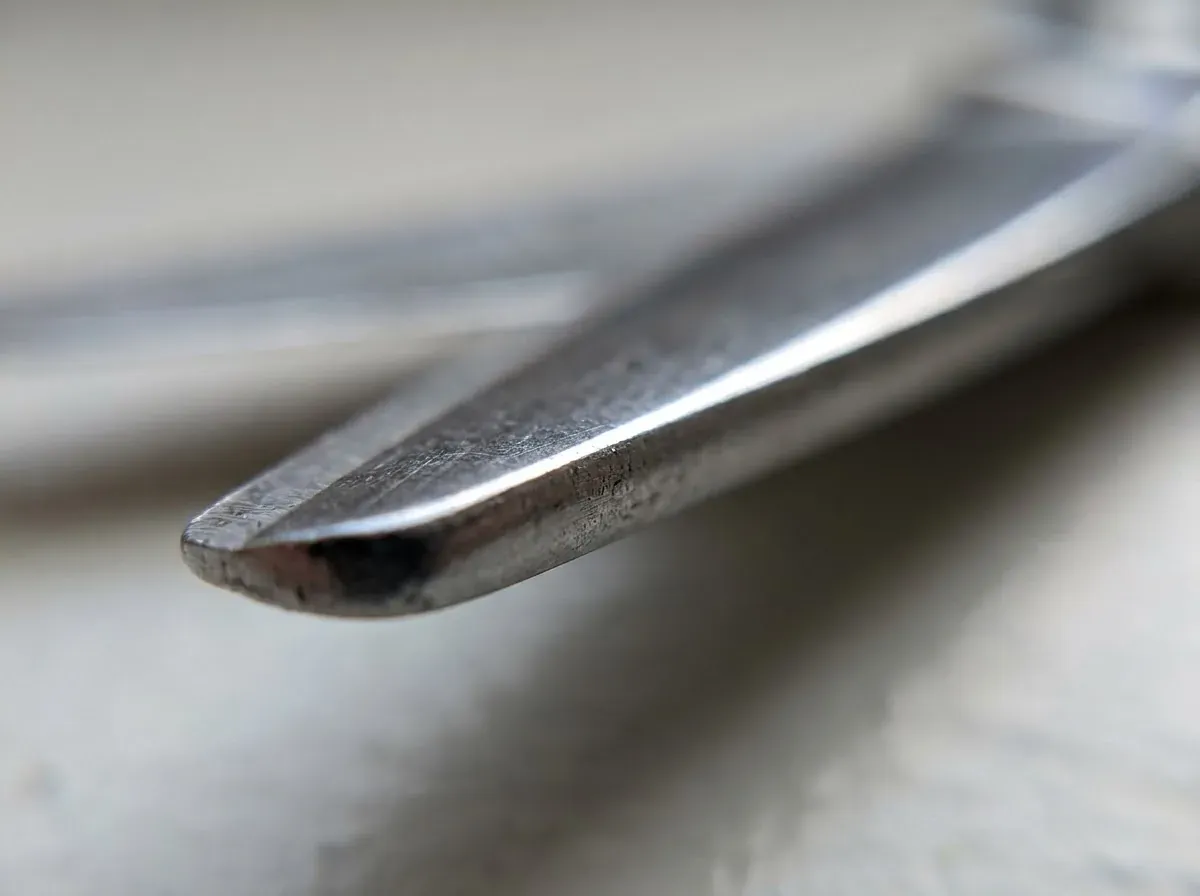
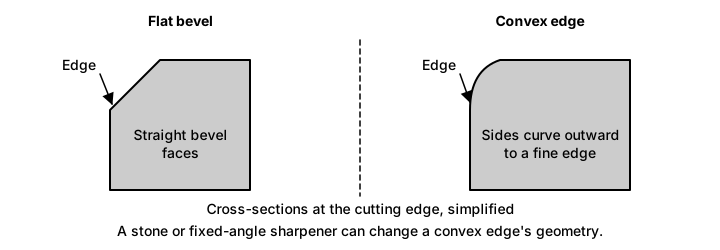
One hair-shear maker describes the blades of its shears as having a convex edge, which curves outward to a very fine point, unlike a flat bevel. That maker says a shear’s edge may be inconsistent in angle or convexity and that it often takes a professional sharpener to spot such inconsistencies, and that edges should only be sharpened by a technician who understands their edge angle, blade curve and alignment.
What makers say about sharpening
- A scissor maker lists hair and thinning scissors as generally best left to a professional.
- A hair-shear maker says edges should only be sharpened by a technician who understands the edge angle, blade curve and alignment.
- Another shear maker says hand sharpening usually will not remove nicks or repair severe damage, and that most sharpening is done on wheel-based systems, so ask which method your sharpener uses.
No opened source gives a safe home angle or grit for hair shears, so we give none.
Care that delays dulling
These steps come from a hair-shear maker’s care guide.
- Wipe each blade with a lint-free cloth from pivot to tip; keep fingers away from the edge.
- Clear hair and product from the pivot with a soft brush; never push pins or metal tools into the pivot.
- Never let liquid dry on a shear; dry it fully before oiling or storing.
- Oil only when clean and dry: open the blades to about 45 degrees, put one or two drops of shear oil near the tension screw, work the blades and wipe off the excess. Avoid cooking oil, hair oil, motor oil and thick grease.
- Check tension: open the shear and let the upper blade fall; it should stop roughly halfway.
- Store each shear in its own padded case; close the blades gently.
For disinfection, follow the product label and the rules where you work. Sizing is explained in the hair shear size guide, and general care in scissor safety and care.
Signs a pair needs service
- The shear pushes or folds hair, or bends it as it cuts.
- It catches at one point.
- It still feels rough after cleaning, oiling and a tension check.
- It has been dropped, or has cut through foil; that maker says to send those in.
- You see a nick.
How often
One shear maker’s rule of thumb is every three to four months or about every 500 haircuts, with metal, wet or dry cutting, care and use all affecting it, and texturizers needing it much less often. Treat it as one maker’s guide, not a standard.
Choosing a sharpener
Ask three questions: what method do you use, do you take the shears apart, and will you restore the factory edge? A poor earlier sharpening can prevent a factory edge from being restored. For thinning shears see thinning shears.
FAQ
Can I sharpen hair scissors at home?
The sources opened advise against it. A scissor maker lists hair and thinning scissors as generally best left to a professional, and a hair-shear maker says shear edges should only be sharpened by a technician who understands the edge angle, blade curve and alignment. Home cleaning, oiling and tension checks are the safe maintenance.
How often should hair shears be sharpened?
One shear maker gives a rule of thumb of every three to four months or about every 500 haircuts, adding that metal type, wet or dry cutting, care and frequency of use all matter and that texturizing shears need it less often. Another maker's guide gives no interval and says to service a pair when it pushes or folds hair.
How do I know if my shears are dull or just dirty?
Clean the pivot and blades, oil them, then check the tension, since a maker says a shear that still pushes or folds hair, catches at one point or feels rough after those steps is due for service. A shear maker also says that bending hair is a sign the pair is ready to be sharpened.
What is a convex edge and why does it matter?
A convex edge curves outward to a very fine point, unlike a flat bevel. A shear maker says a shear's edge may be inconsistent in angle or convexity and that it often takes a professional sharpener to spot such inconsistencies. The same maker says edges should only be sharpened by a technician who understands their edge angle and blade curve, so we do not suggest a home stone.
What should I ask a sharpener before handing over my shears?
Ask what method they use, whether they take the pair apart and whether they will restore the factory edge. One shear maker advises against handing shears to just anyone and notes that wheel-only sharpening without dismantling can cause problems later. Also ask about turnaround and whether a test cut is done afterwards.
Sources
- Victorinox: How to Sharpen Scissors (victorinox.com)
- Hanzo: How to Clean, Oil and Sterilize Scissors (hanzo.com)
- Hanzo: Where to Get Your Shears Sharpened (hanzo.com)
- OSHA 3080: Hand and Power Tools (osha.gov)
Keep reading
- How to Sharpen Scissors: Methods by Blade Type
How to sharpen scissors: which method suits household, fabric, pinking, hair and garden blades, how to keep the factory edge, and when to use a pro.
- Does Cutting Aluminum Foil Sharpen Scissors?
Does cutting aluminum foil sharpen scissors? What the opened maker sources say about foil, honing and burrs, and what to do for a truly dull pair.
- How to Sharpen Fabric Scissors Without Ruining Them
How to sharpen fabric scissors without ruining them: why shears dull, what to check first, home options versus a maker or professional service.
- How to Sharpen Garden Scissors and Pruning Shears
How to sharpen garden scissors and pruning shears: clean first, file or stone the bevel side only, remove the burr, oil, and disinfect when needed.
- How to Sharpen Pinking Shears: What Works
How to sharpen pinking shears: why the zig-zag blades are different, what home sharpening risks, what a maker of sharpening equipment says, and care tips.
- How to Sharpen Scissors at Home: Step by Step
A step-by-step home routine for plain household scissors: clean, sharpen the existing bevel, remove the burr, oil and test cut, plus when to stop.