Thinning Shears: What They Are and How They Work
- First published
- Filed under
- Hair and barber shears
Thinning shears pair one straight blade with one toothed blade. Because the teeth skip over some of the hair between the blades, each closing cuts only part of it. Makers differ on tooth counts and on names such as thinning, texturizing and blending shears, so compare tooth count and gap width rather than the label.
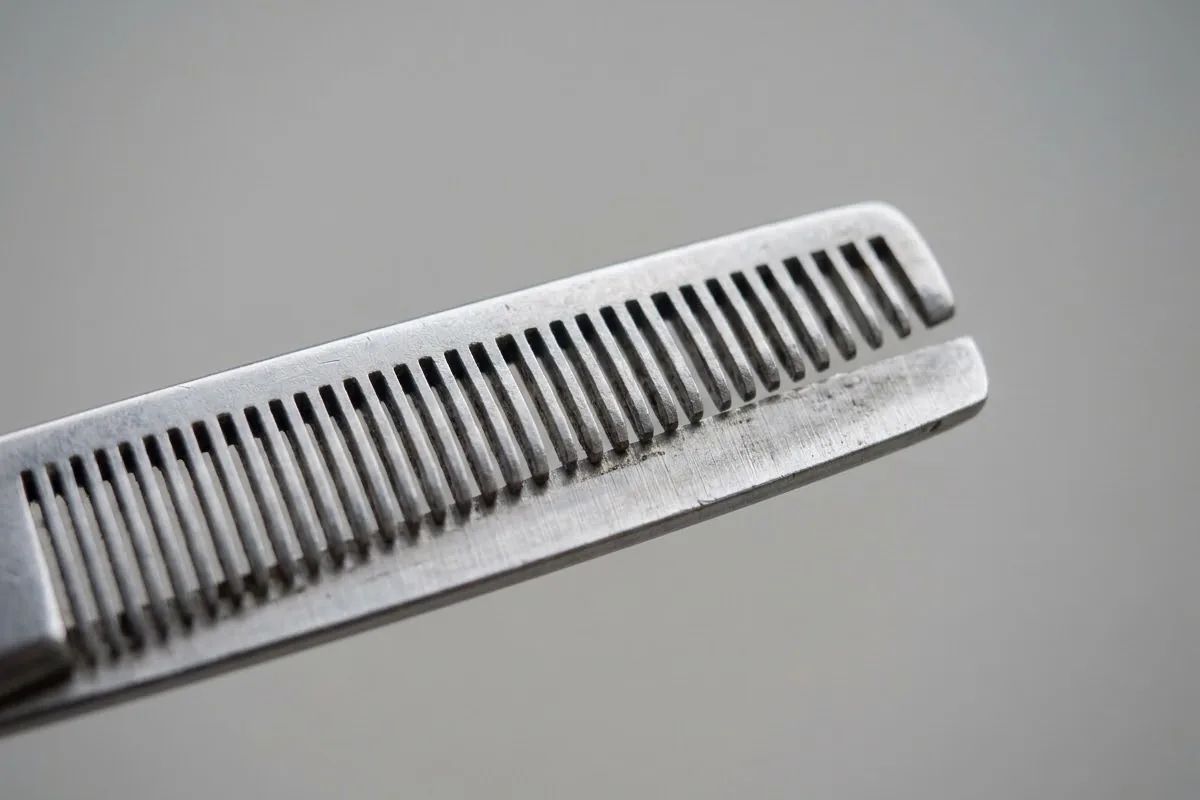
Thinning shears are a type of hair scissors that pair one straight blade with one toothed blade. Because the teeth skip over some of the hair between the blades, each closing removes only part of it. This page explains the tool: how the teeth work, how thinning, texturizing and blending shears differ, how to choose among them and how to look after them. It is explanation only; it does not offer salon services or haircut instructions. For the wider family, see barber scissors and shears.
What are thinning shears?
Thinning shears are scissors where one blade is straight and the other is toothed. A maker describes the construction for both thinning and texturizing shears this way: one straight blade paired with one toothed blade. Makers sell the tool under several names.
The word “notch” appears in many shop listings for the gaps between teeth. The maker sources opened for this guide describe the teeth and gaps but do not define a standard for notch shape, so shapes (rounded, V-shaped, square) vary. One maker describes its fine-tooth model as having teeth with V-shaped ends for softness on one blade and a blunt blade on the other.
How do thinning shears work?
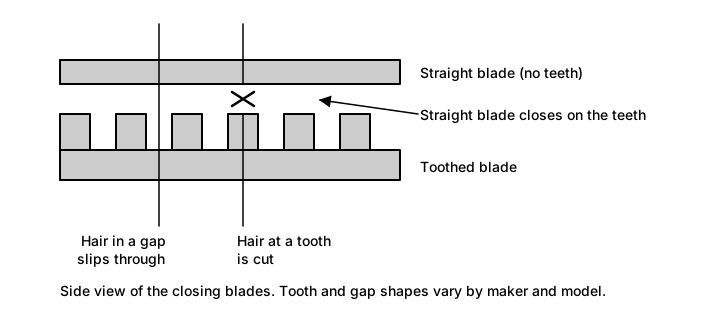
When the blades close, hair lined up with a tooth is cut and hair lined up with a gap passes through. The result is that only a portion of the hair caught between the blades is removed on each closing. One maker says less space between the teeth means less hair is removed, in small sections.
The amount removed depends on the tooth count and spacing:
- Fine, close teeth remove less hair per closing.
- Wide, far-apart teeth remove more per section and in a coarser pattern.
- Another maker describes a blending shear with a blunt second blade and says that type of shear typically removes about 32 percent of hair.
Treat these numbers as one maker’s description, not a standard. Another maker’s range differs, so rely on the specifications of the pair you actually own.
Thinning versus texturizing versus blending shears
| Feature | Thinning | Texturizing | Blending |
|---|---|---|---|
| Blades | One straight, one toothed | One straight, one toothed | One maker’s model: toothed on one side, blunt on the other |
| Teeth (one maker’s description) | About 20 to 40, close together | About 5 to 14, far apart | Many fine teeth (one model has 42) |
| Hair removed per closing | Less | More | Typically a smaller share; one maker says about 32 percent |
| Typical purpose | Reduce bulk in small controlled sections | Create texture with wider gaps | Soften the line where lengths meet |
The names are used loosely by different makers. One maker states it prefers to call its fine-tooth shear a blending shear rather than a thinning shear. Because there is no agreed standard, always compare tooth count and gap width, not the label.
How do you choose a pair?
- Tooth count and gap. Fine and close for gentle removal; wide for a coarser effect.
- One toothed blade or two. Check the maker’s description; the makers opened for this guide describe one toothed blade.
- Length. The same hand-fit rule applies as for other hair shears; our hair shear size guide by hand measurement shows how.
- Handle style and hand. Opposing, offset and crane handles exist, and true left-handed versions are available, as covered in the guide to straight, texturizing and left-handed hair scissors.
- Edge and pivot feel. The pair should open and close smoothly.
Do thinning shears damage hair?
Any sharp tool can damage hair if it is dull, poorly adjusted or used carelessly. A maker notes that thinning shears work best on thick hair and should be used very sparingly, if at all, on fine hair, and that cutting past mid-shaft can leave shorter hairs sticking up. The same maker advises against using them on curly hair. These are maker opinions about technique, and this site does not teach haircuts.
How do you care for thinning shears?
- Remove hair from between the teeth after each use; fine teeth trap hair.
- Clean with rubbing alcohol on a cotton ball, as one maker describes for shears generally, taking care around the edges.
- Oil the pivot as the maker directs; one maker holds the shears tips-down with the blades open at about 45 degrees, adds a couple of drops at the pivot, opens and closes, and wipes clean.
- Check tension if the shears bend hair or leave sections uncut.
- Store closed in a case.
Where tools are used on other people, disinfection is governed by state boards. One state board’s consumer factsheet describes washing with soap and water, then immersing in an EPA-registered disinfectant for the manufacturer’s recommended time. Professionals follow their own state’s rules.
Safety and handling
This is general information; follow the maker’s instructions. The teeth do not make the tool safe: it is as sharp as any scissors. Keep it closed when not in use, keep it away from children and do not test the edge on skin. OSHA’s hand-tool guidance says knives and scissors must be sharp because dull tools can cause more hazards than sharp ones, and that damaged tools should not be used.
Related guides
- How thinning shears are used: handling explained.
- Types of hair-cutting scissors: the object types.
- How to sharpen hair scissors.
- Types of scissors.
Reviewed by the editorial desk against the cited sources. General information about tools; not a haircutting guide or professional advice.
All Hair And Barber Shears guides
- Barber Scissors and Shears: Types, Sizes and Care Explained
Barber scissors and shears explained: how the terms are used, parts of a shear, edge types, how length is measured and chosen, and basic care.
- Hair Scissors: Straight, Texturizing and Left-Handed
Hair scissors explained: how they differ from household scissors, the main types, handle styles, left-handed designs, edge grades and basic care.
- How Thinning Shears Are Used: Handling Explained
How thinning shears are held and handled, how makers describe their use, common mistakes with the tool, and how to clean and store them safely.
FAQ
Are thinning shears the same as texturizing shears?
They are close relatives but not identical. Both pair a straight blade with a toothed blade. One maker says thinning shears have about 20 to 40 closely spaced teeth and remove less hair per closing, while texturizing shears have about 5 to 14 wider-spaced teeth and remove more. Another maker calls the fine-tooth type a blending shear, and names are used loosely.
How do thinning shears work?
One blade is straight and the other has teeth with gaps. When the blades close, hair in line with a tooth is cut and hair in line with a gap passes through, so only part of the hair caught between the blades is removed. One maker says that less space between the teeth means less hair is removed, in small sections.
Do thinning shears damage hair?
Used carelessly they can leave uneven or short hairs. A maker warns that cutting past the middle of the hair shaft can leave shorter hairs that stick up, and advises using thinning shears sparingly or not at all on fine hair. Any sharp tool can damage hair if it is dull or poorly adjusted, so keep edges clean and tension correct.
What is the difference between thinning and blending shears?
The names overlap. One maker calls its fine-tooth model a blending shear and uses both terms in the same article. Because the sources opened for this guide show no agreed standard, compare the number of teeth, the gap between them and the maker's description of how much hair each cut removes.
How many teeth should thinning shears have?
There is no single correct number. One maker says thinning shears usually have about 20 to 40 teeth, and another describes a 42-tooth model as a blending shear. More, closer teeth remove less per closing; fewer, wider teeth remove more. Pick by what the maker says about hair removed per cut and by your hand's comfort.
Can thinning shears be sharpened at home?
Sharpening a toothed blade is a different job from sharpening a plain one, and the sources opened for this guide give no home method, so follow your maker's instructions and consider a service. See our how to sharpen hair scissors page for the options explained, and check your maker's care instructions before trying anything on the edge.
Sources
- Scissortec: The Difference Between Thinning and Texturizing Shears (scissortec.com)
- Sam Villa: Texturizing Shear, Thinning Shear or Blending Shear, Which to Use and When (samvilla.com)
- Sam Villa: Shear Maintenance, How to Oil and Care for Your Shears (samvilla.com)
- California Board of Barbering and Cosmetology: Infection Control in the Salon (factsheet) (barbercosmo.ca.gov)
- OSHA 3080: Hand and Power Tools (osha.gov)
Keep reading
- Barber Scissors and Shears: Types, Sizes and Care Explained
Barber scissors and shears explained: how the terms are used, parts of a shear, edge types, how length is measured and chosen, and basic care.
- Hair Scissors: Straight, Texturizing and Left-Handed
Hair scissors explained: how they differ from household scissors, the main types, handle styles, left-handed designs, edge grades and basic care.
- How Thinning Shears Are Used: Handling Explained
How thinning shears are held and handled, how makers describe their use, common mistakes with the tool, and how to clean and store them safely.