How to Choose Pruning Shears: A Short Checklist
- First published
- Filed under
- Garden and pruning
To choose pruning shears, match the blade type to the wood, check the stated cutting capacity against your thickest stem, test the fit in your hand and pick a model you can clean and oil easily. Extension pages favor bypass blades for live stems. Do not buy for the biggest job you might do; use loppers or a saw for that.
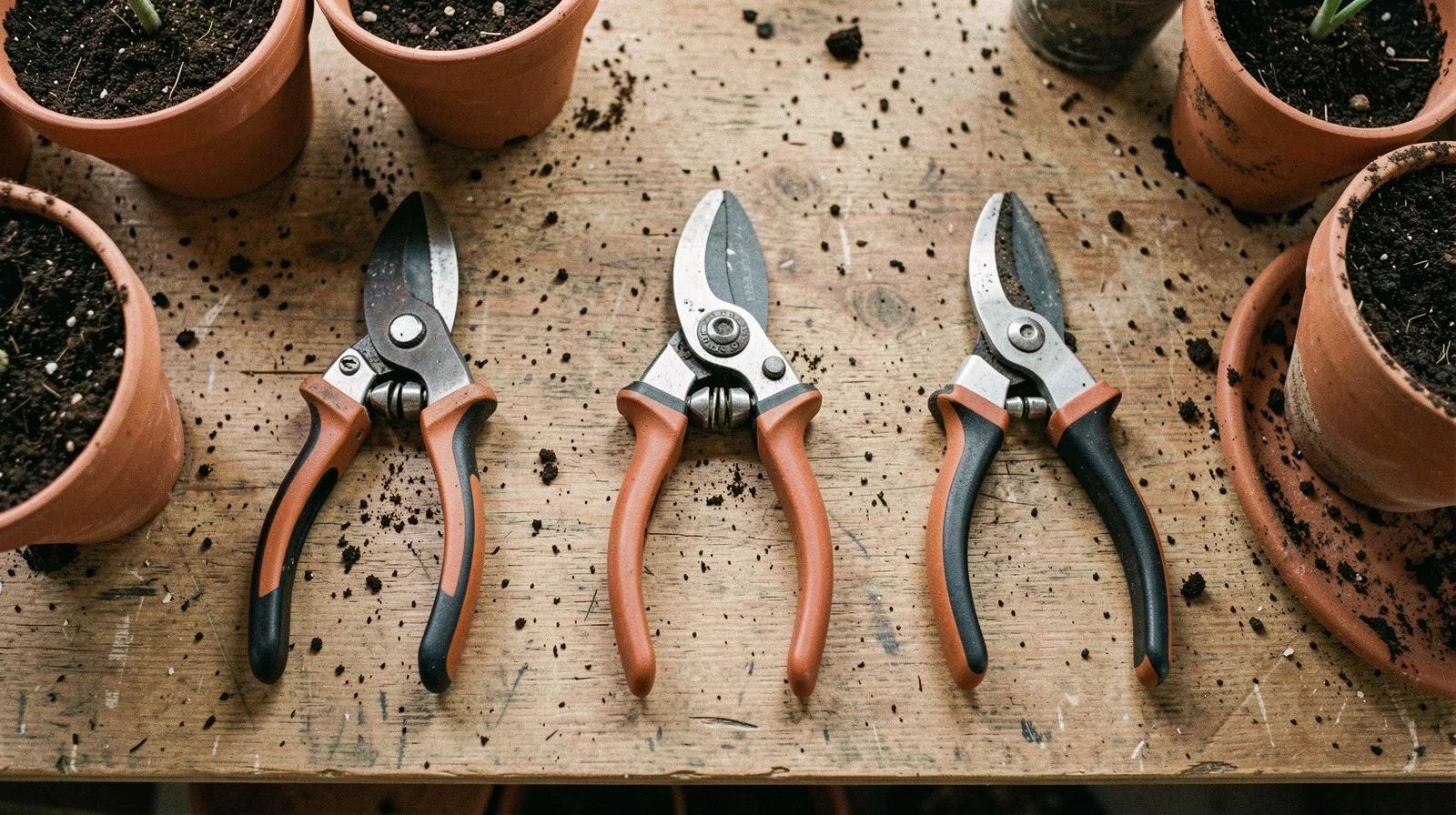
Belongs to the guide: Pruning Shears: Types, Choosing and Care
General information; follow the maker’s instructions. Pruning blades are sharp: handle them closed, cut away from yourself and keep your free hand clear.
Choosing pruning shears comes down to five checks: blade type, cutting capacity, hand fit, handedness and upkeep. This page is a short checklist; the full background on the tools is in our pruning shears guide. We do not rank models or recommend sellers, so the checklist is about what to look for.
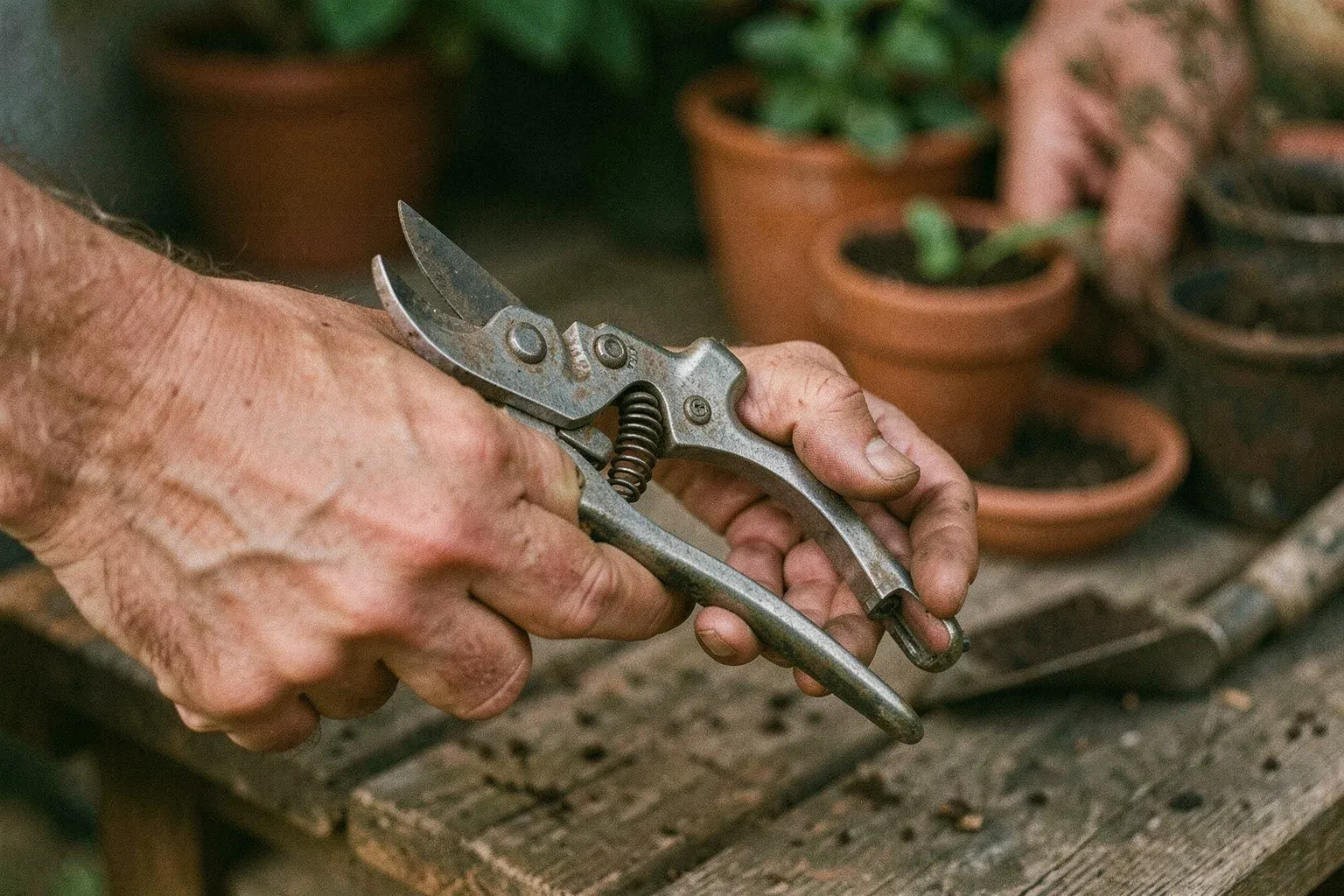
1. Match blade type to the task
Pick bypass blades for live stems and anvil only if most of your work is dead, dry wood. Colorado State Extension favors bypass pruners, and UNH Extension says anvil pruners are not recommended for live wood because they crush stems. Our page on how a bypass blade cuts shows the difference.
2. Check the cutting capacity against your stems
Look for the stated capacity, which is the maximum stem diameter the tool is designed to cut. A pruner maker says to check it and that about one inch is enough for most garden tasks. Sizes from extension pages are lower, and they vary, so use the maker’s number as the limit and measure your thickest regular stem.
A rule that saves tools: if the stem is bigger than the capacity, step up to loppers or a saw. Penn State Extension says hand pruners are not designed to cut a 1-inch branch.
3. Test hand size and grip
A pruner that fits your hand needs less force. A pruner maker’s guidance is to size from your hand, and to choose the smaller size when between sizes for better control. In a shop or a friend’s garden, check these points:
- You can open the handles to full width without stretching.
- The closing squeeze does not strain your wrist.
- Your finger does not catch on the lock or latch.
- There is room for gloves if you wear them.
A pruner maker also mentions ergonomic features such as cushioned handles and rotating grips for those who prune a lot. Those are comfort features, not requirements.
4. Left-handed models
If you use your left hand, look for a pair made for it. A pruner maker lists a left-handed counterpart to one model, which shows these exist. Our left-handed scissors page explains why the blade layout matters.
5. Maintenance you will actually do
Look for blades that open for cleaning, a pivot you can tighten and spare parts. A pruner maker says that replaceable parts let you service a tool indefinitely, and to check spare parts are available.
Plan a simple routine: wipe after use, oil the pivot, sharpen the bevel when the cut turns ragged. The steps are in how to sharpen garden scissors and pruning shears.
Quick checklist
- Live wood: bypass.
- Capacity is at least your usual stem; bigger stems go to loppers or a saw.
- Fit: reaches comfortably, small enough for control.
- Handedness matches yours.
- Parts and cleaning are easy.
If you grow roses, see our rose pruners page for what they need from a pruner.
Common mistakes when choosing
- Buying for the thickest stem you can imagine. Penn State Extension says to use loppers or a pruning saw for a stem a hand pruner is not designed to cut.
- Ignoring capacity. Maryland Extension warns that cutting branches too big for the pruners damages the plant and dulls or ruins the tool.
- Skipping care. Even a good pair needs cleaning, oil and a sharp bevel. A pruner maker says never to sharpen a dirty blade.
Questions to ask a seller or check on the box
- Is it a bypass or an anvil design?
- What cutting capacity does the maker state?
- Which hand is it made for, and what sizes are offered?
- Can the blade, spring and pivot parts be replaced?
- Where is the maker’s own care and sharpening guide?
You can read answers to these on the maker’s own pages, so you do not need to rely on a seller. For a bigger picture of where pruners sit among the other tools, see our guide to the other kinds of scissors.
FAQ
Do I need a ratchet pruner?
Not for ordinary pruning. None of the university extension pages we cite say a ratchet mechanism is needed, and they put the emphasis on blade type, sharpness and matching the tool to the stem size. If grip strength is an issue, ask the maker how its ratchet or lever design works and check its stated capacity before you buy.
Should I buy bypass or anvil pruners?
For living stems, extension pages point to bypass pruners: Colorado State favors them and UNH says anvil pruners are not recommended for live wood. Anvil pruners are described as suited to dry or dead wood. Most gardeners who prune mixed live growth should start with a bypass pair.
What size pruners should I buy?
Choose by hand fit as well as capacity. A pruner maker measures sizes from your hand, with small up to 17.5 cm and large above 20 cm, and says the smaller size often gives more control when you fall between. Open the handles fully while holding the pair; you should reach the grip without stretching.
How thick a stem should the pruners be rated for?
Pick a pruner whose stated capacity covers most of your stems and use bigger tools for the rest. A pruner maker says about 1 inch is sufficient for most tasks, while Colorado State gives about 1/4 to 1/2 inch for hand pruners depending on hardness. If your real stems are thicker, add loppers or a saw instead of a heavier pruner.
Are left-handed pruners available?
Yes. A pruner maker lists a left-handed counterpart to one of its models, so left-handed versions exist from at least some makers. Many standard pairs are made for right hands, so check the product description. Our left-handed scissors page explains how blade layout affects your view of the cut line.
How do I keep pruners in good condition?
Clean sap off with soap and water, dry the blades, oil the pivot and keep a light film on the metal. A pruner maker says to never sharpen a dirty blade and to sharpen only the beveled side. Choose a model with available spare parts, because a pruner maker notes that replaceable parts let you service a tool for years.
Sources
- Felco: How to Choose the Best Pruning Shears for Your Garden (america.felco.com)
- Penn State Extension: Cool Tools for New and Seasoned Gardeners (extension.psu.edu)
- UNH Extension: The Basics of Pruning Trees and Shrubs (extension.unh.edu)
- Colorado State University Extension: Pruning Cuts (extension.colostate.edu)
- University of Maryland Extension: Pruning Tools (extension.umd.edu)
- Felco: How to Sharpen and Maintain Pruning Tools (america.felco.com)
Keep reading
- Pruning Shears: Types, Choosing and Care
What pruning shears are, how bypass and anvil blades differ, what size of stem each tool suits and how to clean, oil and keep them sharp.
- Bypass Pruning Shears: How They Cut and When to Use Them
How bypass pruning shears cut with passing blades, why extension pages prefer them for live stems, and how to adjust, clean and sharpen the bevel.
- Rose Pruning Shears: What to Look For
What roses need from a pruner: clean, sharp bypass blades, reach for thorny canes, cleaning between plants and the cut extension guides describe.