Pruning Shears: Types, Choosing and Care
- First published
- Filed under
- Garden and pruning
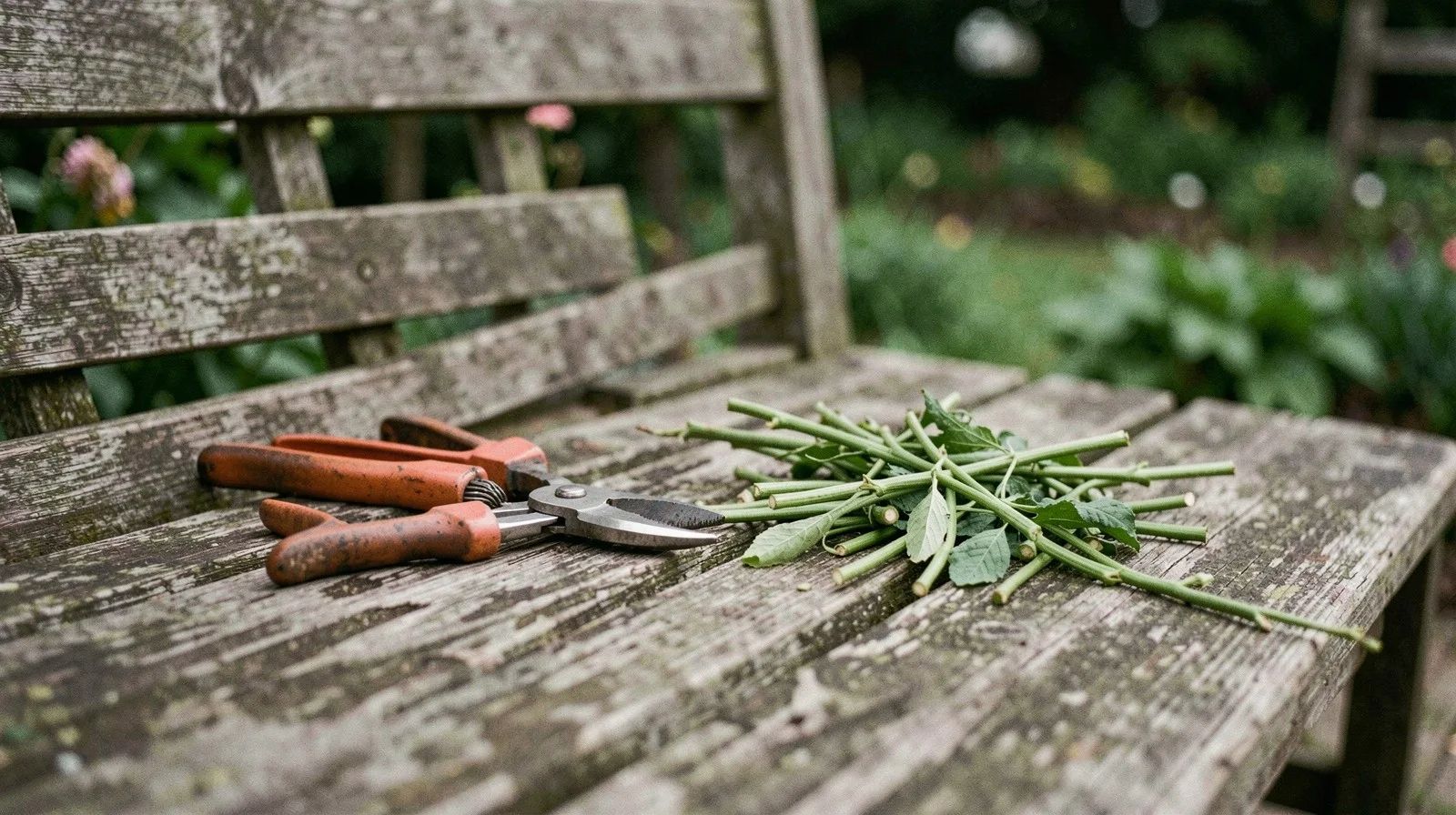
Pruning shears are hand-held garden cutters, and the usual choice for live stems is a bypass pair, whose blades pass each other like scissors. University extension pages describe bypass blades as cleaner on living wood than anvil blades, and give different size limits for hand pruners, loppers and saws. Keep blades clean, sharp and lightly oiled.
General information, not professional advice: pruning tools are sharp. Follow the maker’s instructions and wear gloves and eye protection suited to the job.
Pruning shears are one-handed garden cutters for stems and small branches, and the type most gardeners need first is the bypass pair. This page explains the kinds of cutter, what stem size each suits, how to fit a pair to your hand and how to look after it. For a close look at the blade action, see bypass pruning shears, and for a short buying checklist see how to choose pruning shears.
What counts as pruning shears?
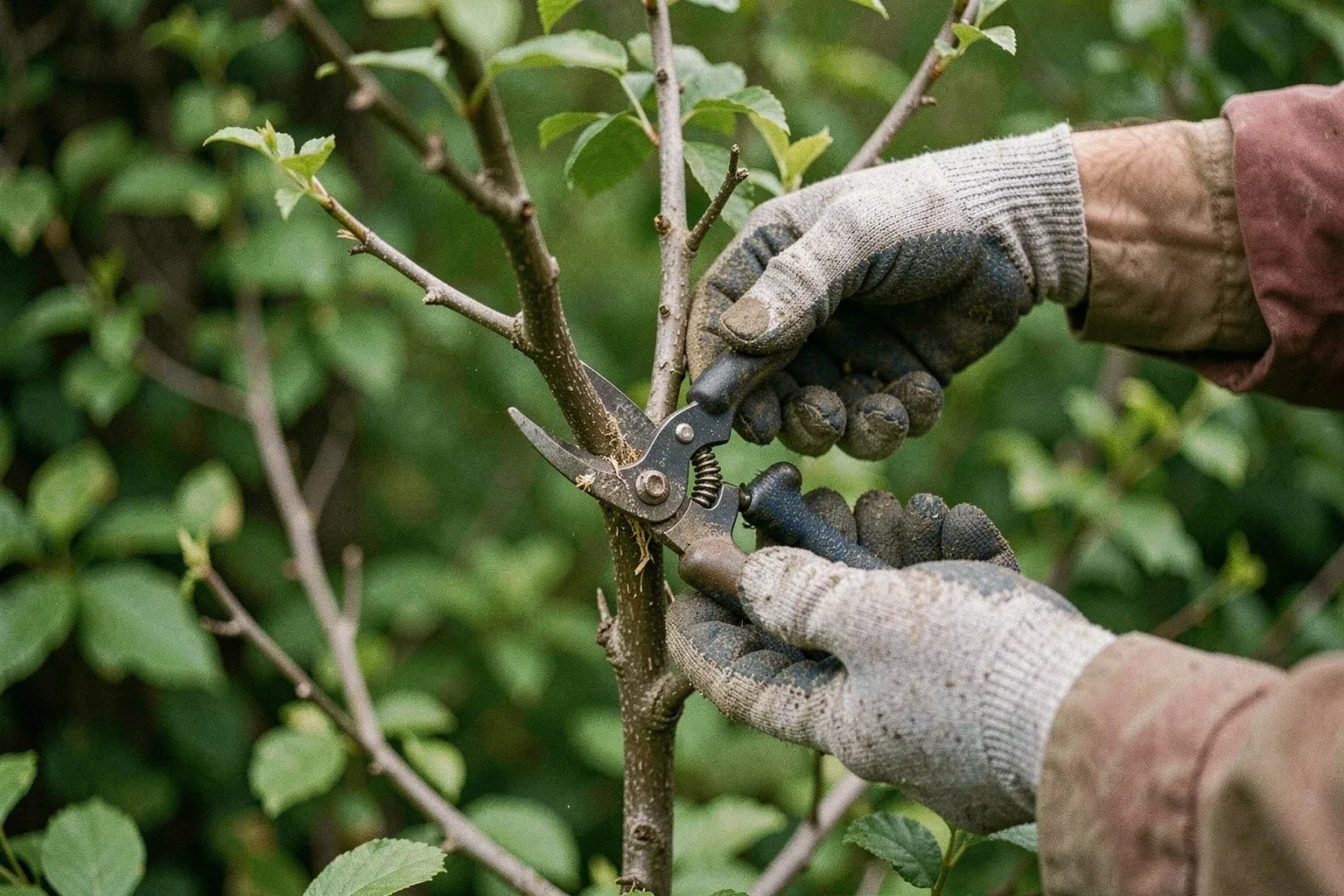
Pruning shears are hand-held cutters for trimming plants, usually used with one hand. Names vary: “secateurs” is the common British term for the same tool, and some sources use “pruning shears” for long-bladed hedge clippers, so always check what a page means. Maryland Extension states that its “pruning shears” are for hedges only and are not for branches.
Around the hand pruner sit a few related tools:
- Loppers are long-handled cutters. The longer handles give leverage for stems a hand pruner cannot take.
- Pruning saws handle larger limbs. UNH Extension says to use a saw on branches larger than half an inch.
- Hedge shears have long straight blades for clean, level cuts on hedges.
All of these are covered in our wider guide to the main scissor kinds.
Bypass, anvil and ratchet: how the blades differ
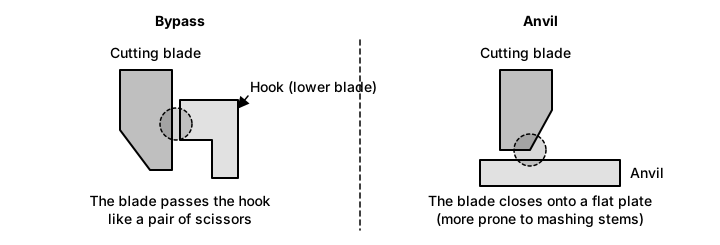
A bypass pruner has two blades that pass each other like scissors. An anvil pruner has one blade that closes onto a flat plate or block. Colorado State Extension favors bypass pruners and says anvil types are more prone to tearing and mashing tissue.
| Feature | Bypass | Anvil |
|---|---|---|
| Blade action | Blades pass each other | Blade closes on a flat plate |
| Effect on live stems | Cleaner cut, less crushing | Can crush stems |
| Where sources place it | Live wood and green growth | Dead, dry wood |
| Blade bevel (Minnesota Extension) | Single bevel | Double bevel |
A pruner maker says bypass pruners are the most common and versatile type and are ideal for live branches, while anvil pruners are better suited to dry or dead wood. Ratchet-style pruners are a mechanism some makers add; none of the extension pages we cite assess them, so check the maker’s own description and capacity rather than relying on a general claim.
What size of stem does each tool cut?
Extension sources give different numbers, and that is normal because the limit depends on how hard the wood is and how sharp the blades are. Read them as ranges, and treat the tool’s printed capacity as the real limit.
- Hand pruners: about 1/4 to 1/2 inch (Colorado State), up to half an inch (UNH), up to one inch (Maryland). Penn State Extension says a hand pruner is not designed to cut a 1-inch branch.
- Loppers: about one inch (UNH), up to two inches (Colorado State), up to three inches (Maryland).
- Saws: for anything beyond what loppers take, and above half an inch according to UNH.
When a stem is wider than the blades, a single clean cut is not possible and the stem can be damaged (Maryland Extension). Step up a tool rather than forcing the one in your hand.
Fit and comfort
A pruner that fits your hand needs less force and tires you less. A pruner maker says choosing the correct size starts with your hand: its sizes run from small, up to 17.5 cm (6 7/8 inches), to large, above 20 cm (7 7/8 inches), and if you fall between sizes the smaller one usually gives better control for precision work.
Practical checks before you buy or borrow:
- Open the handles fully; you should reach the grip without stretching.
- Close the pruner repeatedly; the squeeze should feel smooth and not strain your wrist.
- If you are left-handed, look for a pair made for the left hand; a pruner maker, for example, lists a left-handed counterpart to one of its models. Our guide to left-handed scissors explains why handedness matters in blade tools.
- Ask whether spare parts exist. A pruner maker notes that replaceable parts let you service a tool indefinitely.
Cleaning and disinfecting
Clean sap and dirt off after use, and disinfect when you move between plants that might carry disease. University of Minnesota Extension says soap and water removes sap and that vinegar should be avoided, as it can contribute to rust on susceptible tools.
For disinfecting, Maryland Extension gives 70 percent alcohol, or bleach diluted one to nine with water, and says to rinse bleach off because it is corrosive to metal. UNH Extension gives isopropyl alcohol or a 10 percent bleach solution, and advises pruning healthy plants first and diseased plants last. Unlike bleach, alcohol carries no corrosion warning in these pages.
Sharpening and oiling
Sharp blades make clean cuts, and dull blades crush and tear (UNH Extension). Three rules appear across the sources:
- Sharpen the bevel only. For a bypass pruner, sharpen only the sloped side of the cutting blade; the anvil or flat side is not sharpened (Colorado State, a pruner maker).
- Keep the factory angle. Minnesota says to follow the natural bevel (10 to 20 degrees) and not try to make a new bevel where none exists; a pruner maker says to match the stone to the existing bevel.
- Never sharpen a dirty blade. A pruner maker’s order is clean, sharpen, deburr with one light stroke, oil, then adjust the pivot until it moves smoothly without play.
Oil the pivot and a light film on the blade after cleaning. Minnesota calls oiling critical for carbon steel blades. Our step-by-step page on how to sharpen garden scissors and pruning shears walks through it, and the method chooser tool can help you decide how to approach it.
Safety
Pruning blades cut fingers as easily as stems. OSHA’s hand-tool publication says knives and scissors must be sharp because dull tools can cause more hazards than sharp ones, that tools should be directed away from other people, and that gloves and eye protection suitable for the hazard should be worn. Close the blades (and engage the lock, if yours has one) when carrying, and keep your free hand behind the cutting line.
Which pruners for which job?
- Shaping a shrub with live green growth: a bypass hand pruner.
- Clearing dead twigs: bypass or anvil, but not an anvil on anything alive.
- A stem thicker than the pruner’s rating: loppers, then a saw.
- Roses: see rose pruning shears.
| Tool | How it cuts | Typical use | Size guidance (varies by source) |
|---|---|---|---|
| Bypass hand pruner | Two blades pass each other like scissors | Live stems and green growth | Up to 1/4 to 1/2 inch (Colorado State); up to 1 inch (Maryland) |
| Anvil hand pruner | One blade closes on a flat plate | Dead, dry wood only | Not recommended for live wood (UNH); more prone to tearing and mashing tissue (Colorado State) |
| Loppers | Long handles add leverage | Thicker stems beyond a hand pruner | About 1 inch (UNH) to 2 inches (Colorado State) to 3 inches (Maryland) |
| Pruning saw | Toothed blade | Stems larger than loppers handle | Above half an inch (UNH) |
| Hedge shears | Long straight blades | Hedges only | Not for branches (Maryland) |
For most live pruning, start with a bypass hand pruner, add loppers for thicker stems and a saw for the rest. Treat the size numbers as approximate, since the limit depends on wood hardness and blade condition, and stay within your tool's rated capacity.
All Garden Pruning guides
- Bypass Pruning Shears: How They Cut and When to Use Them
How bypass pruning shears cut with passing blades, why extension pages prefer them for live stems, and how to adjust, clean and sharpen the bevel.
- How to Choose Pruning Shears: A Short Checklist
A short checklist for choosing pruning shears: blade type, cutting capacity, hand fit, left-handed models and the upkeep you will actually do.
- Rose Pruning Shears: What to Look For
What roses need from a pruner: clean, sharp bypass blades, reach for thorny canes, cleaning between plants and the cut extension guides describe.
FAQ
Which pruners should I use for live wood and which for dead wood?
Use bypass pruners for live wood. Extension pages say their scissor-like action reduces tearing and crushing of living tissue. Anvil pruners press a blade against a flat plate; UNH Extension does not recommend them for live wood but says they can help with quickly clipping dead branches. When unsure whether a stem is alive, treat it as live and use bypass blades.
How thick a branch can pruning shears cut?
Sources differ, so use the tool's rated capacity. Colorado State Extension gives about 1/4 to 1/2 inch for hand pruners depending on wood hardness, UNH says up to half an inch, and Maryland Extension says up to one inch. Penn State Extension notes a hand pruner is not designed to cut a 1-inch branch and recommends loppers or a saw. Stay on the smaller side.
What is the difference between pruning shears and secateurs?
Pruning shears and secateurs are generally names for the same one-handed garden cutter, with secateurs being the common term in British English. Maryland Extension uses the term pruning shears for hedge clippers, so check what a source means. Always check the maker's stated capacity before choosing.
Can I use pruners on very thick branches if I twist them?
No. Maryland Extension warns that cutting branches too big for pruners damages the plant and dulls or ruins the tool. UNH notes larger cuts with loppers can damage bark. Switch to loppers or a pruning saw when the stem is thicker than the pruner's rated capacity.
How should I sharpen pruning shears?
Sharpen only the beveled side of a bypass blade, keep the factory angle, and never sharpen a dirty blade. Maryland Extension names a file, diamond sharpener or whetstone; a pruner maker's care guide describes 5 to 10 steady strokes from heel to tip. Our garden sharpening guide covers the steps in detail.
How do I stop my pruners rusting?
Clean sap off with soap and water, dry the blades fully, then keep a light coat of oil on the blades and pivot. University of Minnesota Extension says oiling is critical for carbon steel blades and warns that vinegar can contribute to rust on susceptible tools. Store the pruners dry with the blades closed.
Sources
- University of Maryland Extension: Pruning Tools (extension.umd.edu)
- Colorado State University Extension: Pruning Cuts (extension.colostate.edu)
- UNH Extension: The Basics of Pruning Trees and Shrubs (extension.unh.edu)
- University of Minnesota Extension: Caring for winter pruning tools (blog-fruit-vegetable-ipm.extension.umn.edu)
- Penn State Extension: Cool Tools for New and Seasoned Gardeners (extension.psu.edu)
- Felco: How to Sharpen and Maintain Pruning Tools (america.felco.com)
- Felco: How to Choose the Best Pruning Shears for Your Garden (america.felco.com)
- OSHA: Hand and Power Tools (publication 3080) (osha.gov)
Keep reading
- Bypass Pruning Shears: How They Cut and When to Use Them
How bypass pruning shears cut with passing blades, why extension pages prefer them for live stems, and how to adjust, clean and sharpen the bevel.
- How to Choose Pruning Shears: A Short Checklist
A short checklist for choosing pruning shears: blade type, cutting capacity, hand fit, left-handed models and the upkeep you will actually do.
- Rose Pruning Shears: What to Look For
What roses need from a pruner: clean, sharp bypass blades, reach for thorny canes, cleaning between plants and the cut extension guides describe.