Bypass Pruning Shears: How They Cut and When to Use Them
- First published
- Filed under
- Garden and pruning
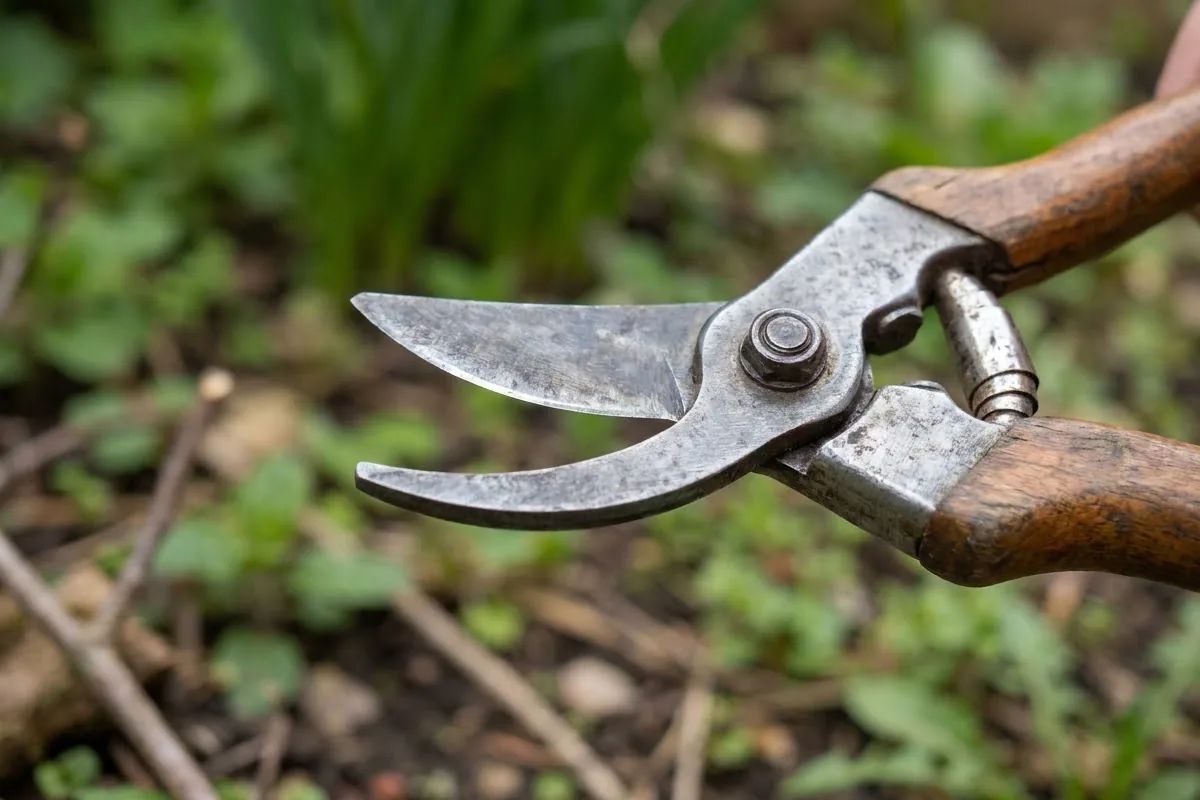
Bypass pruning shears have two curved blades that pass each other like scissors, so one blade makes the cut while the other holds the stem. Extension pages recommend them for live stems because they cut cleanly instead of crushing, and treat anvil pruners as a tool for dead wood. Keep the pivot snug, the blades clean and sharpen only the beveled side.
Belongs to the guide: Pruning Shears: Types, Choosing and Care
General information; follow the maker’s instructions. Pruner blades are sharp: cut away from your body and keep your free hand clear.
Bypass pruning shears are the scissor-action hand pruner that most gardening guidance points to for living stems. They are one kind of hand pruner; this page covers how the blades work, when bypass is the right pick and how to keep one cutting well. If you are still deciding between models, use our short buying checklist for pruners.
How the bypass action works
A bypass pruner has a cutting blade and a hooked lower blade that pass across each other as you squeeze. The cutting blade does the work while the hook supports the stem, which is why the cut is clean when the blades are sharp and snug. A pruner maker describes bypass pruners as using two blades that pass each other like scissors.
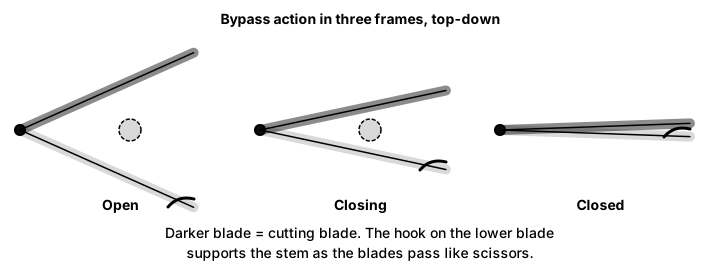
For the cleanest cut, Colorado State Extension says to place the blade toward the plant and the hooked side outward, which lets you cut closer to the stem you are keeping. Maryland Extension says to move the blade up and through the branch, as pushing downward can tear the wood.
Bypass versus anvil: what each does to a stem
The difference is what the stem experiences. Bypass blades shear it. An anvil blade closes onto a flat plate, so a stem is pressed between metal. Colorado State says the anvil type is more prone to tearing and mashing tissue, and UNH Extension does not recommend anvil pruners for live wood. A pruner maker says anvil pruners are better suited to dry or dead wood.
That does not make bypass pruners the right answer for everything. Maryland Extension warns that cutting branches too big for the pruners damages the plant and dulls or ruins the tool. If the stem is bigger than the blades can wrap around, use loppers or a saw instead. The sizes extension pages give are listed in our pruning shears guide.
Care and gap adjustment
Two checks keep a bypass pruner cutting cleanly: the pivot and the blade edge.
- Clean first. A pruner maker says never to sharpen a dirty blade. Brush off loose dirt, and use a resin remover for sticky sap. Minnesota Extension says soap and water also removes sap.
- Check the pivot. Tighten the pivot nut until the blades move smoothly without play. They should pass closely without gaps and without grinding.
- Oil lightly. A little oil on the pivot and a light film on exposed metal reduces friction and guards against moisture and corrosion (a pruner maker). Minnesota calls oiling critical for carbon steel blades.
- Watch for gaps. If a thin stem folds between the blades rather than cutting, the pivot is loose or the edge is dull. Fix those before you push harder.
Sharpening the bevel
Sharpen only the beveled side of the cutting blade and keep the factory angle. A pruner maker says to lay the stone flat against the existing bevel and push from the heel toward the tip, and not to work the stone back and forth. It says the original factory bevel for most high-quality bypass pruners typically falls between 23 and 25 degrees, and says to match the stone to the existing bevel. Minnesota Extension gives a natural bevel of about 10 to 20 degrees, so numbers differ between makers; follow your pruner’s own bevel.
Do not sharpen the anvil (hook) blade, and do not file the flat reverse side, which would ruin the fit. Remove the burr with one light stroke on the flat side only. Full instructions are in how to sharpen garden scissors and pruning shears.
Using bypass pruners on roses and other shrubs
A University of Maryland Extension rose-pruning guide says a bypass-style pruner works well for small canes. Our rose pruner page covers cut placement and what to look for in a rose pruner.
Common mistakes
- Forcing a stem that is too big. If you have to twist or lean, the stem is beyond the capacity. Switch to loppers or a saw.
- Using an anvil pair on green wood. Extension pages say it crushes live stems.
- Sharpening the wrong face. Filing the flat side or the hook changes the fit and the blades stop cutting cleanly.
- Putting them away wet. Dry the blades and oil the pivot so the metal does not rust. Minnesota Extension says to avoid vinegar for cleaning because it can contribute to rust on susceptible tools.
- Ignoring the pivot. A loose pivot lets stems fold between the blades; a tight one makes the squeeze tiring.
Questions to ask before you buy
Is the pair a true bypass, with a blade that passes a hooked lower blade? What is the stated cutting capacity? Do the blades come apart for cleaning or replacement? Is there a left-handed version if you need one? None of this needs a brand: the answers are on the product description and the maker’s care page.
| Feature | Bypass | Anvil |
|---|---|---|
| Action | Blades pass each other like scissors | One blade closes on a flat plate |
| Live stems | Recommended by extension pages | Not recommended; can crush |
| Dead wood | Fine on small dead stems within its capacity | Suited to dry or dead wood (a pruner maker) |
| Blade bevel (Minnesota Extension) | Single bevel | Double bevel |
Choose bypass for anything that is alive. Keep an anvil pair, if you own one, for dry dead twigs only.
FAQ
Are bypass or anvil pruners better for dead wood?
Anvil pruners are the one place sources favor them: a pruner maker says anvil pruners cutting against a flat surface suit dry or dead wood, and UNH says they can help with quickly clipping dead branches. Bypass pruners can also cut small dead stems within their rated capacity. If you cannot tell whether a stem is alive, use bypass.
Why do bypass pruners cut cleaner than anvil pruners?
The two blades pass each other like scissors, so the cut is made by shearing rather than by pressing a blade against a flat plate. Maryland Extension says bypass pruners are superior to anvil pruners because they reduce the tearing or crushing of tissue. UNH Extension says bypass pruners make clean, close cuts that heal faster.
Which way round should I hold bypass pruners?
Colorado State Extension advises placing the blade toward the plant, with the hooked anvil side on the outside, which allows a closer cut. Maryland Extension adds to move the blade up and through the branch, since moving it downward can tear the wood. Keep the pruner at a consistent angle and cut in one smooth squeeze.
How do I adjust the gap on bypass pruners?
A pruner maker's guide says to tighten the pivot nut until the blades move smoothly without play, so they pass closely without gaps and without grinding or resistance. Check the maker's instructions for your model first, because some pruners use a different adjustment. If the blades will not close cleanly after adjustment, the blade may be bent or worn and need replacing.
Can left-handed gardeners use bypass pruners?
Yes. A pruner maker lists a left-handed counterpart to one of its models, so left-handed versions exist from at least some makers. Check that the cutting blade sits where you can see your cut line. Our left-handed scissors page explains why that matters for any blade tool.
Sources
- Colorado State University Extension: Pruning Cuts (extension.colostate.edu)
- University of Maryland Extension: Pruning Tools (extension.umd.edu)
- UNH Extension: The Basics of Pruning Trees and Shrubs (extension.unh.edu)
- University of Maryland Extension: Guide to Pruning Roses (extension.umd.edu)
- University of Minnesota Extension: Caring for winter pruning tools (blog-fruit-vegetable-ipm.extension.umn.edu)
- Felco: How to Sharpen and Maintain Pruning Tools (america.felco.com)
- Felco: Garden Tools Guide (america.felco.com)
- Felco: How to Choose the Best Pruning Shears for Your Garden (america.felco.com)
Keep reading
- Pruning Shears: Types, Choosing and Care
What pruning shears are, how bypass and anvil blades differ, what size of stem each tool suits and how to clean, oil and keep them sharp.
- How to Choose Pruning Shears: A Short Checklist
A short checklist for choosing pruning shears: blade type, cutting capacity, hand fit, left-handed models and the upkeep you will actually do.
- Rose Pruning Shears: What to Look For
What roses need from a pruner: clean, sharp bypass blades, reach for thorny canes, cleaning between plants and the cut extension guides describe.