Embroidery Scissors: Small Snips for Fine Work
- First published
- Filed under
- Sewing and fabric
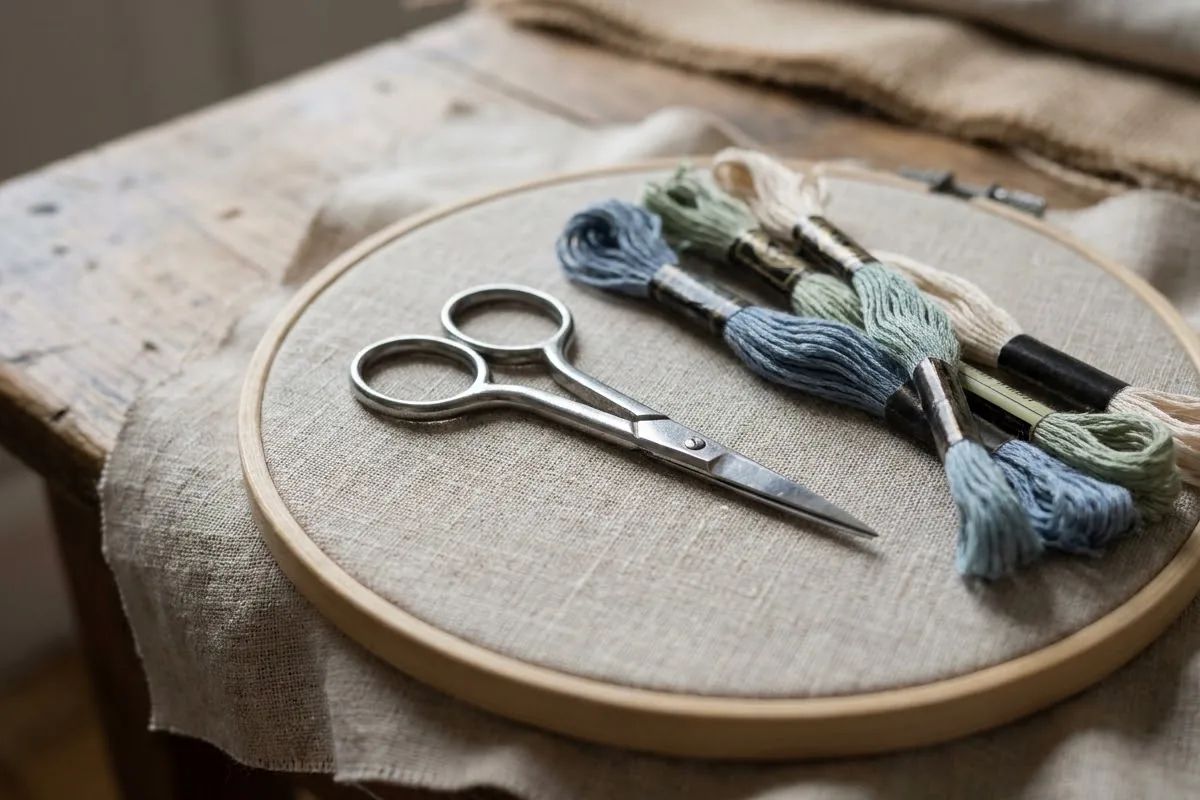
Embroidery scissors are small, fine-tipped scissors for clipping thread and close trimming. Extension guidance lists small scissors for thread alongside sharp shears for cloth. Keep them to one job, store them closed in a case and send nicked or dull pairs to a professional.
Belongs to the guide: Fabric Scissors: How to Choose Shears for Cloth
Embroidery scissors are small, fine-tipped scissors for trimming thread and close work. They sit at the small end of the sewing kit, well away from the long cutting pair described in our guide to fabric scissors. This page sticks to what extension and maker sources say about small scissors: what they are for, how to keep them sharp and how to protect the points. It does not rank pairs or catalogue every shape, because no official source we opened does.
Safety note. Fine tips are easy to push into a finger when cutting close to your work. This is general information; follow the maker’s instructions. OSHA’s hand-tool guidance says knives and scissors must be sharp, because dull tools can cause more hazards than sharp ones. Reviewed by the editorial desk against the cited sources.
What small scissors are for
Extension guidance lists “small scissors (for clipping threads)” among basic sewing supplies, with the advice to keep them by the sewing machine and clip thread as you sew. Separate from them, the same guide lists sharp dressmaker shears for cutting fabric. That split is the point: a small pair does thread and close trimming, and the long pair does the cutting.
The sewing-industry glossary distinguishes scissors from shears by length: scissors are under 10 inches with two identical handles, and shears are 10 inches or longer. Small embroidery pairs fall well inside the scissors side. Most scissors are made for right-handed use, but left-handed and ambidextrous models are available, according to the same source. For how the rest of the kit fits together, see the sewing kit overview.
What we could not confirm
Hobby sites describe curved, angled, bird-shaped and no-finger-hole styles of embroidery scissors, but we found no extension, standards or maker-care page that defines them, so we do not describe them here. If you are choosing a pair, read the maker’s own description of the blade and tip, and test the pair on a scrap of your thread and fabric before relying on it.
Keep them to one job
A premium-scissor maker says most premium scissors have a designated purpose, whether that is fabric, paper or hair, and that cutting inappropriate materials, even a quick piece of paper, can dull the blades and damage the edges. For small scissors, which have little blade to spare, that is a good reason to label the pair and keep it out of the household drawer. Use a separate pair for paper, card and tape.
Storing and protecting the tips
- Store them closed, in a protective case or sheath. The maker above says a case shields the blades from damage and moisture.
- Do not toss them loose into a drawer with other tools, where they can nick the blades or misalign them.
- If you drop a pair, check it for nicks and misalignment before using it again.
When they stop cutting cleanly
A scissor maker lists the signs that scissors need sharpening as material folding or snagging, uneven or inconsistent cuts, increased resistance while cutting and slipping on smooth surfaces. The same guide says dirt build-up or incorrect adjustment can mimic a dull edge, so clean the blades and check the screw first.
If the pair is nicked or bent, or still folds thread after cleaning, send it to a professional. A sewing organisation says using a reputable professional to keep scissors and shears in excellent condition is well worth the price, and a premium-scissor maker says nicks should go to a professional sharpening service. Our sharpening guide and scissor safety and care pages cover the options and routines in more detail.
Where they fit
They are the last tool in the line: shears for cutting the cloth, zigzag-edge seam-finishing shears, small scissors for thread, and a rotary cutter as an alternative for long straight cuts. To compare the tools, see the wider scissors family.
Reviewed by the editorial desk against the cited sources. General information; it does not replace the maker’s instructions.
FAQ
What are embroidery scissors used for?
They are small scissors for thread work. The extension guidance we opened lists small scissors for clipping thread as basic sewing supplies, kept by the machine. We found no official source that sets out embroidery-specific shapes, so this page does not describe them.
Can I cut paper with embroidery scissors?
It is best not to. A premium-scissor maker says that cutting inappropriate materials, even a quick piece of paper, can dull the blades and damage the edges. Keep a separate pair of general scissors for paper and card, and keep the small pair for thread and close work so its fine blades are not worn by other materials.
How should I store embroidery scissors?
Closed, in a protective case or sheath, away from other loose metal tools. One scissor maker says a case shields the blades from damage and moisture, and advises against tossing scissors loose into a drawer where they can nick the blades or misalign them.
How do I know if my small scissors are dull?
A scissor maker lists material folding or snagging, uneven cuts, extra resistance and slipping on smooth surfaces. Before blaming the edge, clean the blades and check the pivot, because dirt and incorrect adjustment can mimic dullness. If a pair is nicked or bent, a professional sharpening service is the safer route.
Who should sharpen fine-pointed scissors?
A sewing organisation recommends a reputable professional to keep scissors and shears in excellent condition, and a premium-scissor maker says nicks should go to a professional sharpening service. Our sharpening guide explains the options, and the method chooser tool can help you decide between sharpening at home and sending a pair away.
Sources
- Utah State University Extension: Basic Sewing Supplies (extension.usu.edu)
- Whiteley: How to Take Care of Premium Quality Scissors & Shears (whiteley.co.uk)
- Victorinox: How to Sharpen Scissors (victorinox.com)
- Sewing.org: Scissor Sense (sewing.org)
- OSHA 3080: Hand and Power Tools (osha.gov)
Keep reading
- Fabric Scissors: How to Choose Shears for Cloth
How to choose fabric scissors: bent-handle shears, blade length, edge types, hand fit and left-handed options, plus care so cloth cuts stay clean.
- Pinking Shears: What They Are and What They Are For
Pinking shears cut a zigzag edge that limits fraying on woven fabric. See what they do, where they help, where they do not, and how to look after them.
- Sewing Scissors: Which Pair for Which Task
A sewing kit usually needs more than one cutter. See which scissors, shears, snips and rotary tools suit each task, and how to store and care for them.