How to Sharpen Pinking Shears: What Works
- Review by
- Edge & Pivot Editorial Team
- Last checked
- First published
- Filed under
- Sharpening
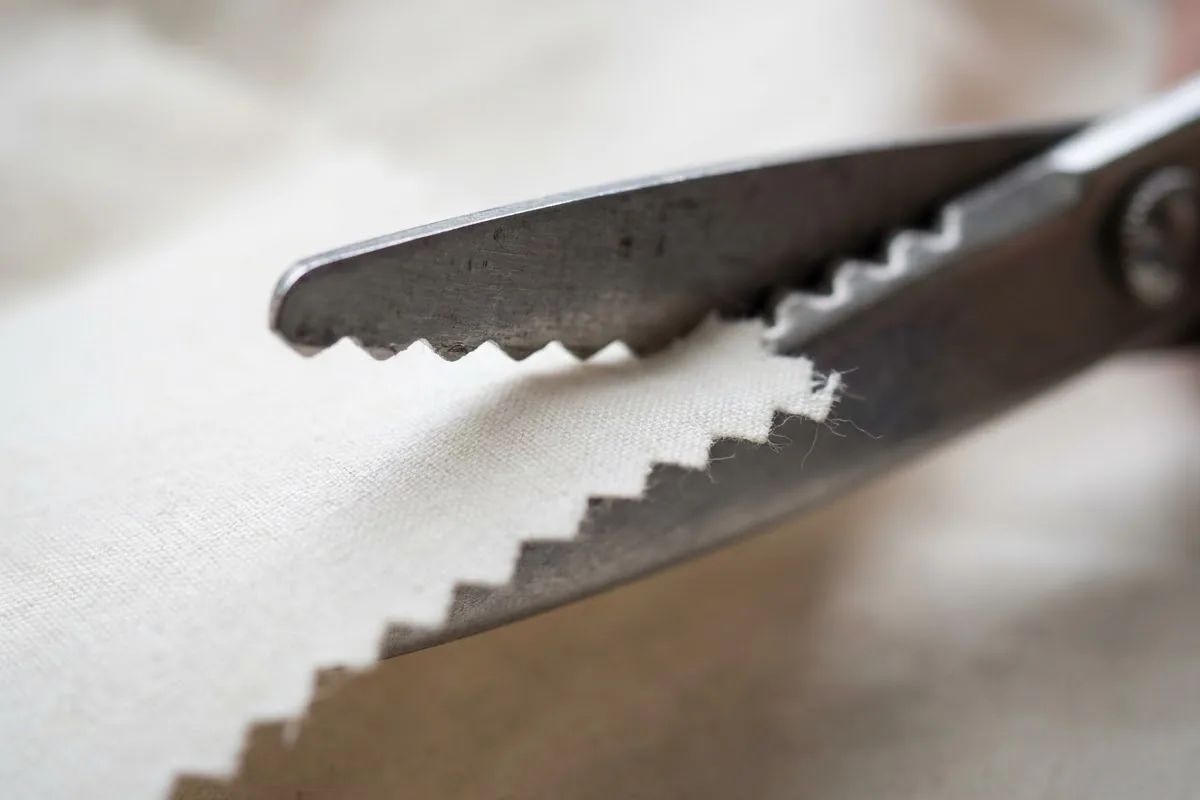
Pinking shears are hard to sharpen well at home. Their zig-zag teeth are cut at an angle, and a sharpening-equipment maker says never to sharpen in between them, so results are less predictable and may not restore cutting. Most guidance points to a professional or the maker. Keep them for fabric, store them dry and expect the cut to be tested first.
Belongs to the guide: How to Sharpen Scissors: Methods by Blade Type
Pinking shears cut a zig-zag edge, and that shaped edge is what makes sharpening them different from sharpening plain scissors. This page explains why and what the sources recommend. For the general overview see the sharpening guide; what the shears are for is on the pinking shears page.
Safety note. The teeth are sharp points. This is general information; follow the maker’s instructions. OSHA’s hand-tool booklet says goggles and gloves must be worn against hand-tool hazards. Reviewed by the editorial desk against the cited sources.
Why pinking blades are different
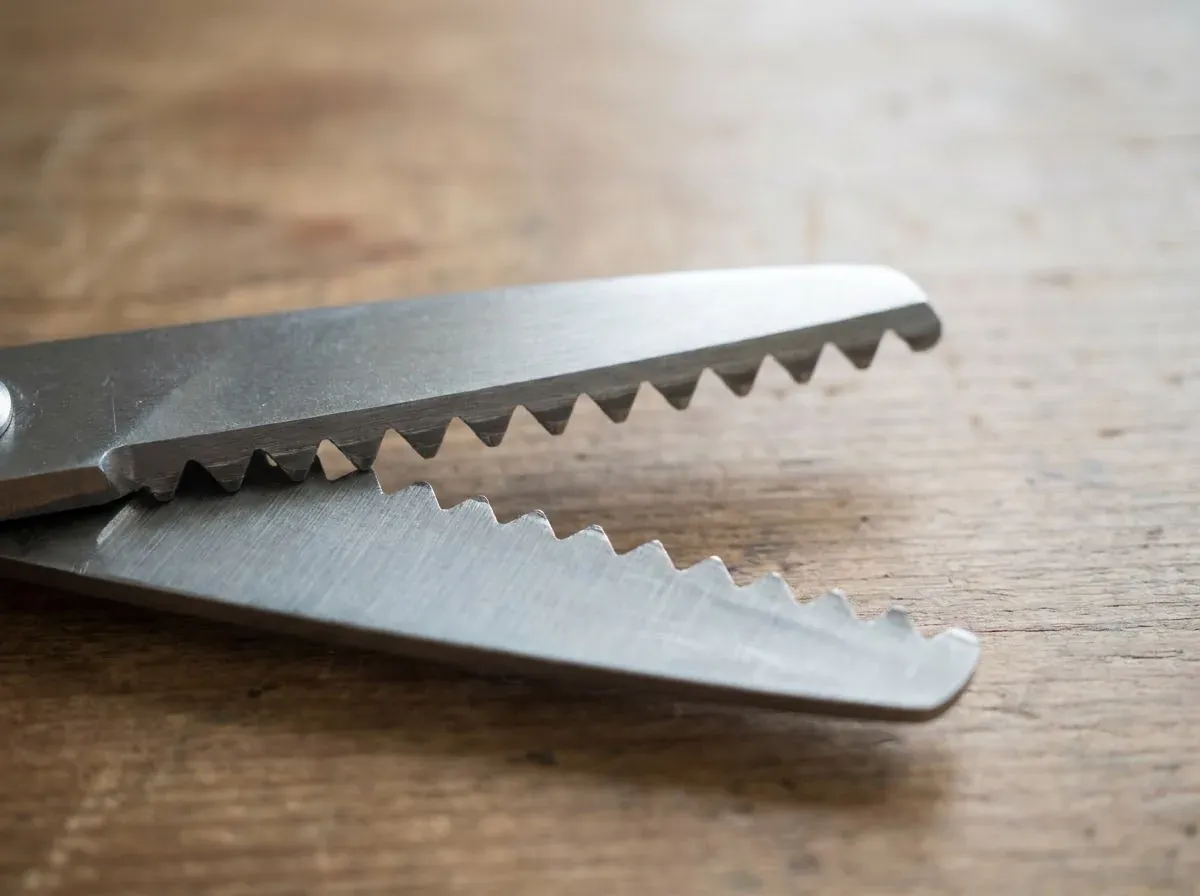
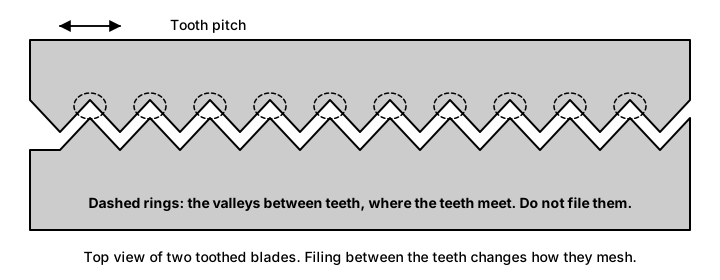
A plain scissor has a straight bevel. A pinking blade has a row of angled teeth, and a maker of professional sharpening equipment says the teeth are cut at a slight angle and finished by repeatedly opening and closing the shears in an abrasive slurry, which leaves a visible lap line along the blade. The way the teeth meet is part of what cuts. That is why sources warn against filing between the teeth, and why results are less predictable than on a straight blade.
Can you sharpen them at home?
Not reliably. The same maker says that even after a good sharpening there is a good chance the shears will not cut again, and recommends testing before sharpening. The maker also says never to sharpen in between the teeth and to match the existing angle as closely as possible. A general scissor maker adds that hair, thinning, premium tailoring and micro-serrated pairs are generally best left to a professional; pinking shears, with their shaped teeth, belong in the same cautious category.
Check before sending away:
- Clean the blades and remove lint.
- Check the pivot tension; a loose screw makes shears chew fabric.
- Test on the fabric you cut most.
- Look for a lap line along the blade face. If it is missing, ask whether sharpening can help.
Maker guidance on service versus DIY
The sources we opened point toward a trained sharpener or the maker. A professional service can judge whether the lap line, teeth and alignment are fit to restore. Ask what method is used, whether the pair is taken apart and whether cutting is tested afterward. We did not find a manufacturer page that gives a safe DIY angle for pinking teeth, so we give none.
Care to keep the zig-zag edge sharp longer
- Use them on fabric only; keep paper and card off them.
- Wipe the blades clean and dry before storage; a case or organiser protects the teeth.
- Add a drop of scissor oil to the pivot now and then.
- Do not drop them. Check for nicks or misalignment if you do.
See scissor safety and care for routines, the fabric-shears page for plain dressmaker shears and sewing scissors for how pairs differ.
FAQ
Will sharpening change the zig-zag pattern?
The sources we opened do not say. A maker of sharpening equipment says never to sharpen in between the teeth, and the way the teeth meet is part of how the shears cut. The same maker says to match the existing tooth angle as closely as possible, so poor work can still change how the teeth cut.
Can I sharpen pinking shears at home?
It is possible only in a limited way, and the sources lean against it. A sharpening-equipment maker says results may not restore cutting even after a good sharpening, and a scissor maker lists specialty edges among those generally best left to a professional. A professional or the maker's service is the safer route.
How do I tell if my pinking shears need sharpening?
Look for fabric that folds or frays instead of cutting cleanly, uneven teeth in the cut edge and extra effort at the tips. Test on the fabric you cut most. Clean the blades and check the pivot before sending them away, because dirt and a loose screw can mimic a dull edge.
Why do some pinking shears not cut at all?
A sharpening-equipment maker says that the blades are shaped by repeated lapping and that, to sharpen, you need a visible lap line the full length of the blade. It also says some pairs may not cut certain fibers. If the lap line is missing or the shears never cut well, sharpening may not help.
How do I keep pinking shears sharp longer?
Use them for fabric only, keep paper away from them, wipe and dry the blades, store them in a case or drawer organiser and put a drop of scissor oil on the pivot occasionally. A premium-scissor maker says cutting inappropriate materials can dull the blades and damage the edges.
Sources
- Wolff Industries: How to Sharpen Pinking Shears (wolffindustries.com)
- Whiteley: How to Take Care of Premium Quality Scissors & Shears (whiteley.co.uk)
- Victorinox: How to Sharpen Scissors (victorinox.com)
- OSHA 3080: Hand and Power Tools (osha.gov)
Keep reading
- How to Sharpen Scissors: Methods by Blade Type
How to sharpen scissors: which method suits household, fabric, pinking, hair and garden blades, how to keep the factory edge, and when to use a pro.
- Does Cutting Aluminum Foil Sharpen Scissors?
Does cutting aluminum foil sharpen scissors? What the opened maker sources say about foil, honing and burrs, and what to do for a truly dull pair.
- How to Sharpen Fabric Scissors Without Ruining Them
How to sharpen fabric scissors without ruining them: why shears dull, what to check first, home options versus a maker or professional service.
- How to Sharpen Garden Scissors and Pruning Shears
How to sharpen garden scissors and pruning shears: clean first, file or stone the bevel side only, remove the burr, oil, and disinfect when needed.
- How to Sharpen Hair Scissors: Options Explained
How to sharpen hair scissors: why shear edges differ from household scissors, what makers say about service versus DIY, and care that delays dulling.
- How to Sharpen Scissors at Home: Step by Step
A step-by-step home routine for plain household scissors: clean, sharpen the existing bevel, remove the burr, oil and test cut, plus when to stop.