Scissor Safety and Care: Cleaning, Oiling and Storing
- Review by
- Edge & Pivot Editorial Team
- Last checked
- First published
- Filed under
- Kinds of scissors
Keep scissors safe and working by handling them closed, cutting away from yourself, wiping them after use, oiling the pivot and storing them closed in a dry place. Sharp scissors are safer than dull ones, because dull tools slip. Follow the maker's instructions for your pair, and supervise children closely, as there is no substitute for direct supervision.
Belongs to the guide: Types of Scissors: A Guide to Every Kind
General information, not professional advice. Scissors and shears are sharp. Follow the maker’s instructions for your pair.
Scissors stay safe and sharp with a simple routine: handle them closed, wipe after use, oil the pivot, keep the pivot snug and store them closed in a dry place. This page covers each step for the common kinds in our types of scissors guide, and links to the pages that go deeper.
Safe handling and passing
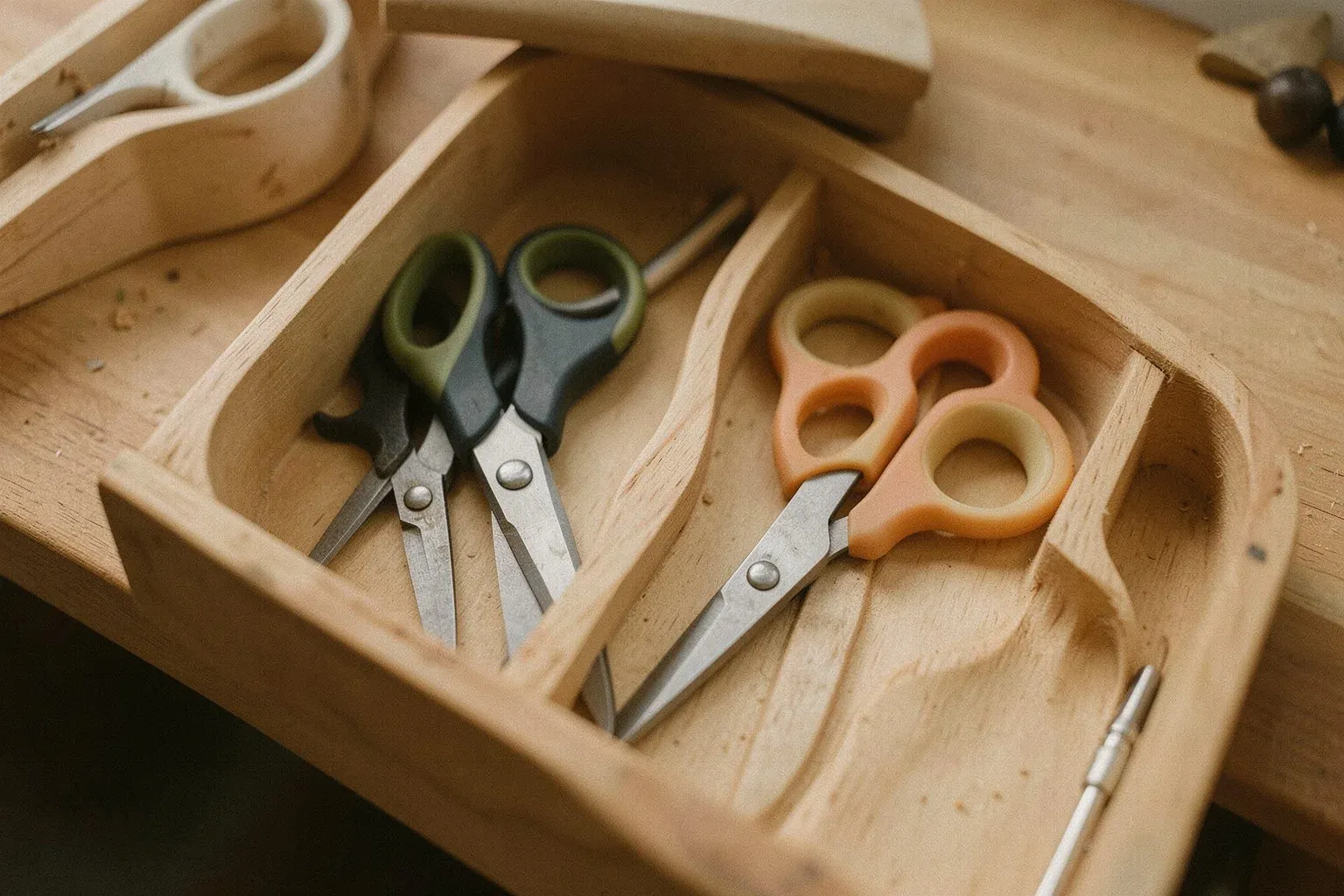
Sharp scissors are safer than dull ones, because a dull blade slips. OSHA says knives and scissors must be sharp, as dull tools can cause more hazards than sharp ones, and that tools should be directed away from other people. In practice:
- Cut away from your body and keep your free hand behind the blades.
- Carry scissors closed, with the points down.
- Hand them to someone handle first, closed.
- Never leave open scissors on a seat, cushion or tangled in cloth.
- Stop and put them down before answering a question or standing up.
For adults who handle sharp blades often, the CPSC guide lists metal-mesh or Kevlar gloves for sharp tools or knives.
Cleaning by material
Clean to suit what the pair cut, then dry it.
| Pair | Clean with | Notes |
|---|---|---|
| Kitchen | Hot, soapy water after each food item (CDC) | Check the maker before the dishwasher; some say hand wash (a kitchen-shear maker) |
| Garden | Soap and water for sap; extension guides name alcohol or diluted bleach to disinfect | Rinse bleach off; avoid vinegar (Minnesota) |
| Fabric, craft | Wipe with a dry or lightly damp cloth | Dry fully |
| Hair shears | Wipe each use; disinfect per maker | Avoid sterilization liquids or color solutions that can corrode (a shear maker) |
| Electric | Disconnect first; compressed air | See the electric scissors page |
Garden details are in the pruning guide, and food washing in the kitchen scissors guide; for the term question, see kitchen shears or scissors.
Oil and pivot tension
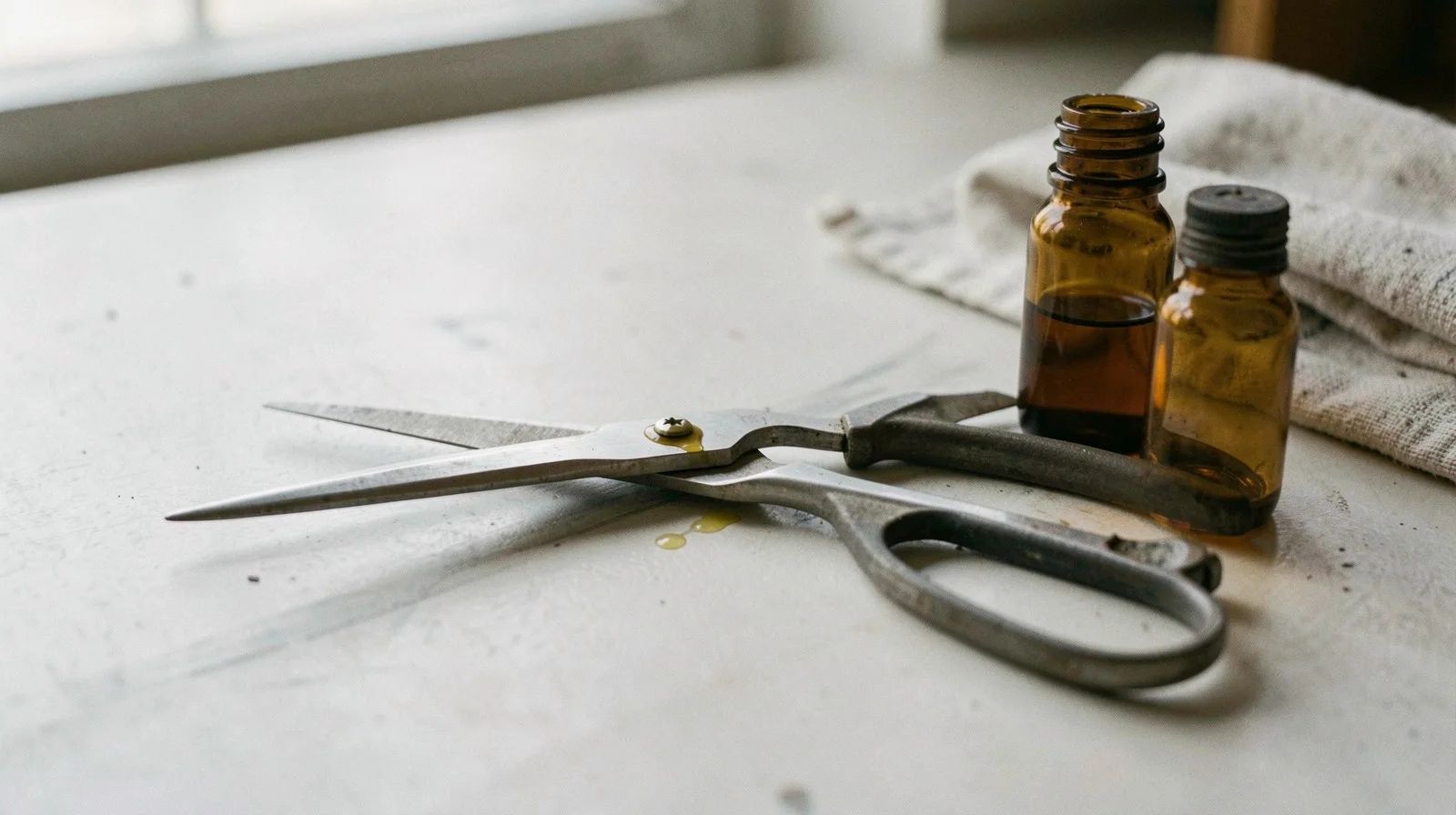
Oil the pivot and keep it snug. A pruner maker says to put a small amount of oil on the pivot bolt and spring and a light film on exposed metal, and to tighten the pivot nut until movement is smooth without play. A shear maker says to lubricate the pivot daily and check tension daily on its professional shears, while one kitchen-shear maker suggests wiping the blades and pivot bolt with a little vegetable oil occasionally. Follow your own maker.
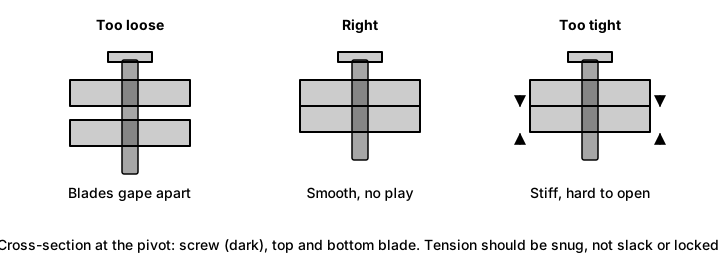
Signs the pivot needs work:
- Blades gap or fold the material: tension is too loose or the edge is dull.
- The action is stiff or grinds: tension is too tight, or the pivot needs cleaning and oil.
- A click or wobble: check for a worn pivot screw.
If you cannot adjust it, take it to a maker or a sharpening service. For sharpening, see how to sharpen scissors.
Storing and travelling
Store scissors closed and dry. A shear maker advises resting shears with the blades closed in a safe place, in a case or holder away from dirt. Do not leave them in a damp tool box or a drawer where the points catch fingers. When travelling, use a rigid case or sheath and check the transport rules for your route before packing any blade.
Teaching kids safe use
The CPSC Art and Craft Safety Guide says children need regular and consistent reminders of safety rules, and that there is no substitute for direct supervision. Use a pair made for children, stay beside them and set simple rules: sit down to cut, point down when carrying, only cut paper or the material you have given them. For left-handed children see left-handed scissors.
Rust and what to avoid
Dry the blades, oil lightly and store dry. University of Minnesota Extension says vinegar can contribute to rust on susceptible tools, so avoid it as a cleaner. Do not leave scissors wet, soak them.
FAQ
How do I stop scissors rusting?
Keep them dry and lightly oiled. Wipe the blades after every use, dry them fully if they got wet, and put a drop of oil on the pivot and a light film on exposed metal, as maker guidance advises. University of Minnesota Extension says to avoid vinegar, which can contribute to rust on susceptible tools. Store closed in a dry place, not in a damp drawer.
How often should I oil scissors?
It depends on use and the maker. One shear maker advises lubricating the pivot daily for professional use, while a kitchen-shear maker says to wipe the blades and pivot bolt occasionally. For home use, oil whenever the action feels stiff or after washing and drying. A single drop worked in by opening and closing is enough.
How do I clean scissors?
Wipe the blades with a damp cloth after use, and wash with warm, soapy water if they are sticky or food-contaminated. Dry thoroughly. Garden pairs need sap removed, and kitchen pairs need hot, soapy washing, as the CDC advises after each food item. Avoid soaking, and check the maker's page before using a dishwasher.
How tight should the pivot be?
Tight enough that the blades meet along the cut without play, loose enough that they move smoothly without grinding. A pruner maker's pruner guide says to tighten the pivot nut until movement is smooth without play and for blades to pass closely without gaps. A shear maker advises checking shear tension on a daily basis for professional use. Follow your maker's adjustment method.
How should I store and carry scissors?
Store them closed, dry and where the points cannot catch fingers: in a case, sheath or block. A shear maker advises resting shears with the blades closed in a safe place. When passing scissors to someone, hand them handle first and closed. Keep adult scissors out of reach of young children.
How do I teach a child to use scissors safely?
Stay close and show the rules: carry them closed, never point them at people, cut only what you are told to and put them away after. The CPSC Art and Craft Safety Guide says children need regular and consistent reminders of safety rules and that there is no substitute for direct supervision. Use a pair made for children.
Sources
- OSHA: Hand and Power Tools (publication 3080) (osha.gov)
- CPSC: Art and Craft Safety Guide (Pub. 5015) (cpsc.gov)
- Kai USA: KASHO shear care instructions (kasho.kaiusa.com)
- Felco: How to Sharpen and Maintain Pruning Tools (america.felco.com)
- University of Minnesota Extension: Caring for winter pruning tools (blog-fruit-vegetable-ipm.extension.umn.edu)
- Cutco: Product care, Cooks' Tools (Super Shears) (cutco.com)
- CDC: Food safety, preventing cross-contamination and cleaning (cdc.gov)
Keep reading
- Kitchen Scissors: What They Do and How to Care for Them
What kitchen scissors are used for, features such as take-apart blades, dishwasher questions and food-safety cleaning after raw meat or poultry.
- Left-Handed Scissors: How They Work and How to Choose
How left-handed scissors differ from right-handed pairs, true left-handed versus symmetrical handles, and how to choose for adults, fabric and garden.
- Types of Scissors: A Guide to Every Kind
A guide to the main types of scissors and shears, grouped by task, material and handedness, with how scissors differ from shears and snips.
- Electric Scissors: Types, Uses and Safety
What electric scissors are, corded versus cordless types, what materials they suit, battery and moving-blade safety, care and blade changes.
- Kitchen Shears vs Kitchen Scissors: Is There a Difference?
Kitchen shears and kitchen scissors overlap in meaning. Learn how the words are used, what features to look for and which term to search or use.