Rose Pruning Shears: What to Look For
- First published
- Filed under
- Garden and pruning
Rose pruning shears are, in practice, clean and sharp bypass hand pruners, with loppers for thicker canes and a small saw for very old, woody roses. Extension guides ask for a slanted cut just above an outward-pointing bud and for clean tools, and disinfecting between plants when disease is a concern. Choose reach and grip, not a rose label.
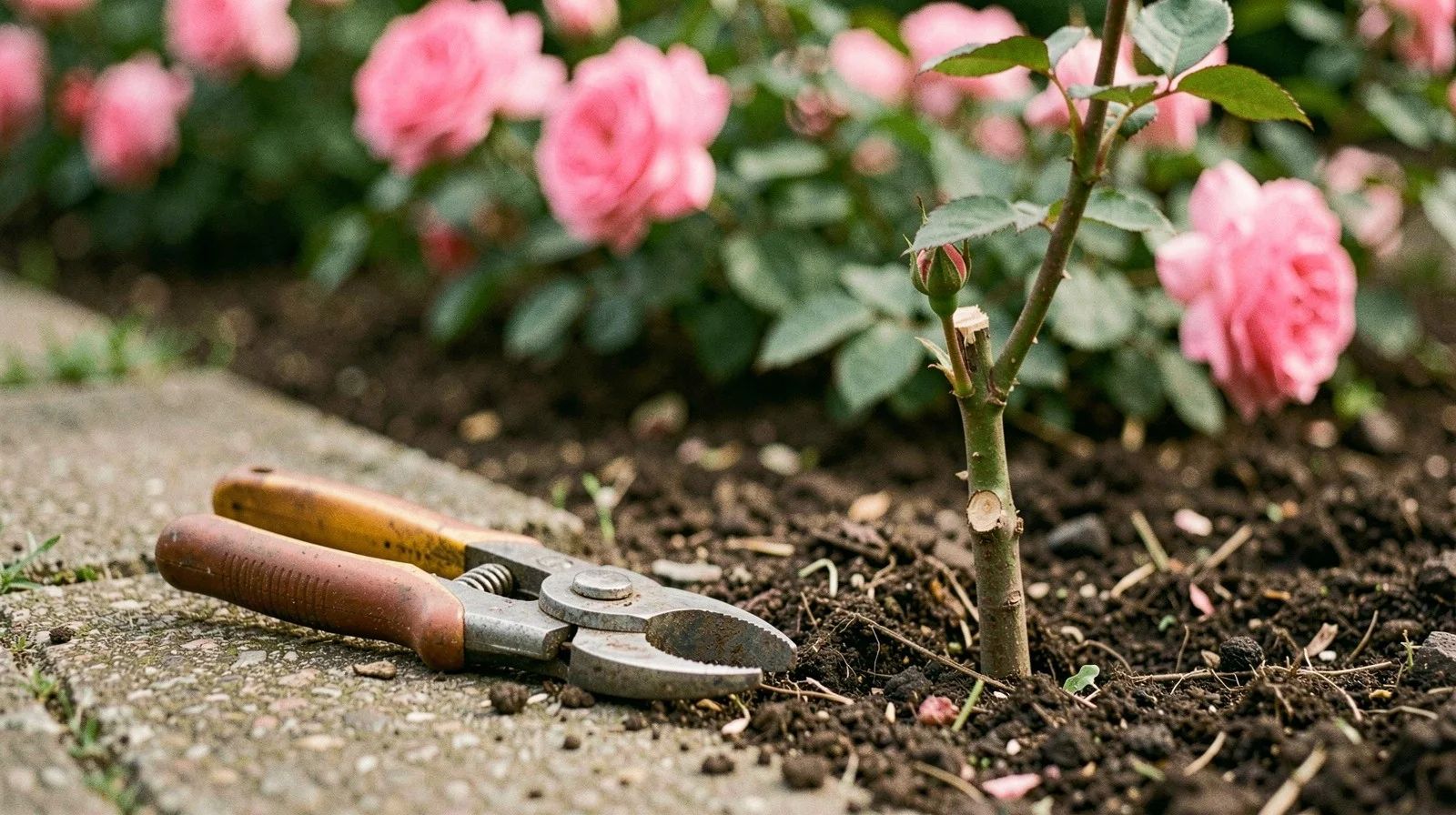
Belongs to the guide: Pruning Shears: Types, Choosing and Care
General information; follow the maker’s instructions. Rose canes have thorns and pruner blades are sharp: wear suitable gloves and eye protection, and cut away from yourself.
Rose pruning shears are, in practice, bypass hand pruners that are clean and sharp, plus loppers for thicker canes. The category is a marketing label rather than a separate tool, so this page covers what a rose actually needs from a cutter. For the wider tool picture, start with our guide to pruning tools, and see the bypass pruner page for the blade action.
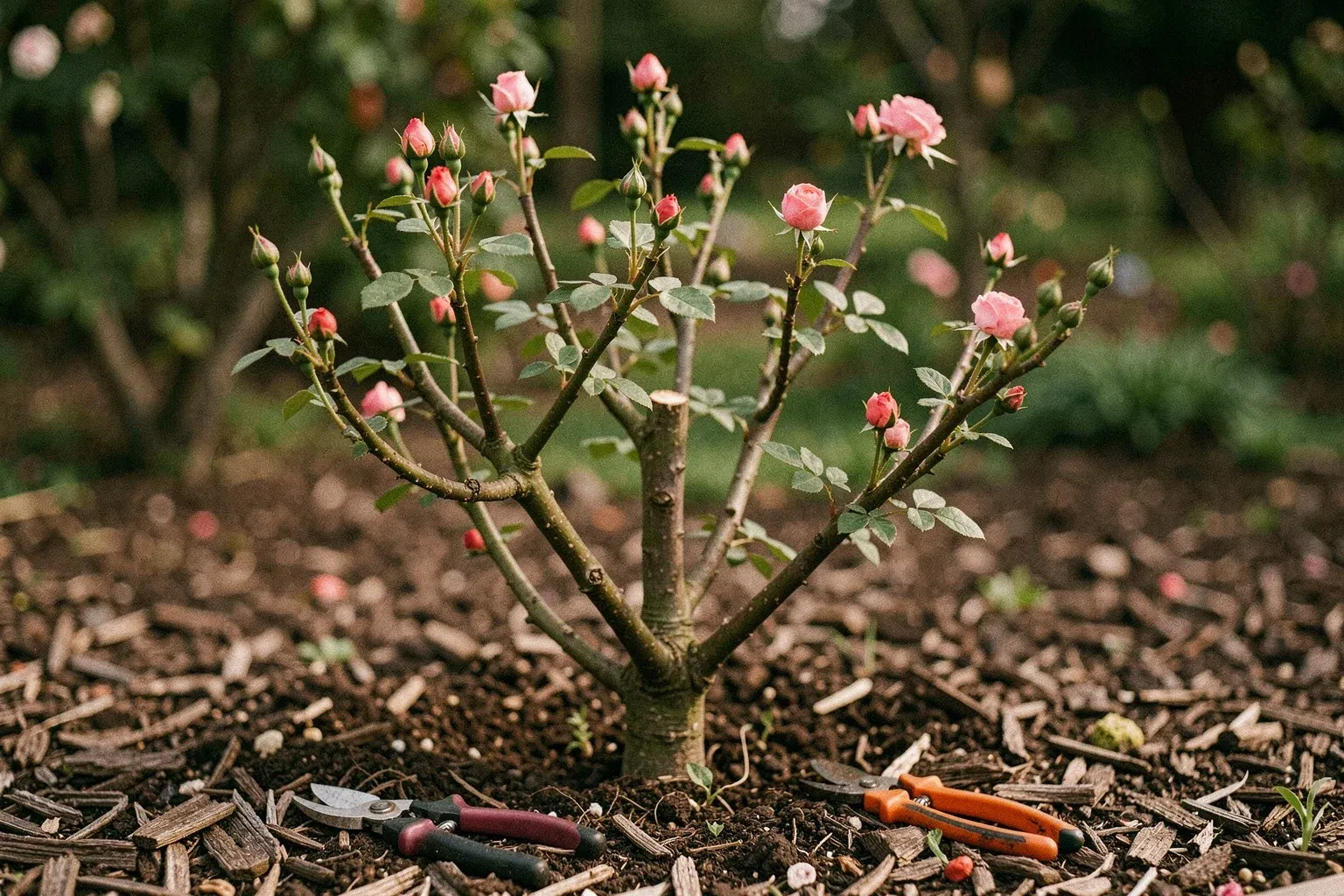
What roses need from a pruner
Roses need clean, sharp blades and a cut that sheds water. The University of Maryland Extension guide says simply: always use clean, sharp pruners. A bypass pair for small canes, loppers for bigger ones, and a hand pruning saw for very old, woody roses cover the tools it names.
The cut matters as much as the tool. The guide says to cut at a slant just above an outward-pointing bud. The slant lets water run off, and pruning to an outward bud sends growth outward rather than into the middle of the shrub. A dull blade tends to leave a ragged edge, so keep the edge honed; our guide to how to sharpen garden scissors and pruning shears shows how.
Reach and hand protection
Thorns make reach and grip practical concerns. A longer-handled lopper keeps your hand further from thorny canes, and a pruner with a comfortable grip lets you control the cut. OSHA’s hand-tool guidance says gloves and eye protection suited to the hazard should be worn. Choose gloves you can still feel the pruner through.
Fit also matters: a pruner maker says choosing size starts with your hand, and that the smaller size often gives more control between sizes. Use our pruner fit checklist for the full list of fit checks.
Cleaning between plants
Disinfect when you move between plants if disease is a concern. Maryland Extension gives 70 percent alcohol, or bleach diluted one to nine with water, and says to rinse bleach off because it corrodes metal. UNH Extension says to prune healthy plants first and diseased ones last. University of Minnesota Extension says to avoid vinegar, which can contribute to rust.
A simple routine for a rose bed:
- Prune healthy bushes first.
- Wipe blades with alcohol between bushes if any show disease.
- Finish with the diseased plants.
- Rinse, dry and oil the pruner before storing it.
Timing
Timing is the area where advice depends on place and rose type, so treat any date as local. The Maryland guide says that, except for climbers, fall pruning cuts the tall canes to about thirty inches, and that some roses are pruned a second time, more severely, in spring. Ask your own extension office for dates for your climate.
Care and sharpening
Oil the pivot and a light film on the blade after cleaning, sharpen only the beveled side, and keep the factory angle. These care steps are the same as for any bypass pruner and are set out in the garden pruners guide.
A simple rose-pruning session
- Check your pruners: edge sharp, pivot snug, blades clean (disinfected if you had diseased plants).
- Start with the thickest dead or damaged canes using loppers, or a small saw on very old, woody canes, as the Maryland guide describes.
- Make each finishing cut at a slant just above an outward-pointing bud.
- Clip small canes with the bypass pruners rather than forcing a thick cane through them.
- Wipe the blades, dry them and oil the pivot before you store them.
What not to do
Do not use anvil pruners on live canes; UNH Extension says they crush stems. Do not twist a pruner through a cane that is too thick. Do not prune with dull blades: UNH Extension says dull tools are likely to crush or tear plant tissue, increasing the likelihood of infection. If a rose has a lot of old wood, ask your local extension office how hard to cut it for your climate rather than copying a single date.
See also: the scissors overview for how pruners fit among the other cutters.
FAQ
When should I prune roses?
Timing depends on the rose type and your climate, so follow your local extension office. The Maryland guide we cite says that, except for climbers, fall pruning cuts tall canes to about thirty inches, and some roses get a second, more severe pruning in spring. Hybrid teas are pruned each spring, though not as severely as in the first season.
Do I need special rose pruners?
No special rose label is needed. Extension guidance asks for clean, sharp pruners, with bypass-style pruners for small canes, loppers for larger canes and a pruning saw for some very old, woody roses. What matters is blade type, sharpness, capacity and a grip that suits your hand, not the word rose on the packaging.
Where do I cut a rose cane?
Cut at a slant just above an outward-pointing bud. The Maryland guide says the slant lets water run off the cut surface, reducing the chance of rot, and that pruning to an outward bud encourages the branch to grow outward, not into the center of the shrub. Use a sharp bypass blade so the cut is clean.
How do I clean pruners between rose bushes?
Wipe or dip the blades in 70 percent alcohol, or in bleach diluted one to nine with water, between plants when disease is a concern (Maryland Extension). UNH Extension says to prune healthy plants first and diseased ones last. Rinse bleach off, since it is corrosive to metal, and dry and oil the blades afterward.
Should I wear gloves when pruning roses?
Thorns and sharp blades both cause cuts, and OSHA's hand-tool guidance says gloves and eye protection suited to the hazard should be worn. The extension guide we cite does not discuss gloves, so choose gloves for the thorn type you are handling. Keep your free hand behind the cut and cut away from yourself.
Sources
- University of Maryland Extension: Guide to Pruning Roses (extension.umd.edu)
- University of Maryland Extension: Pruning Tools (extension.umd.edu)
- UNH Extension: The Basics of Pruning Trees and Shrubs (extension.unh.edu)
- University of Minnesota Extension: Caring for winter pruning tools (blog-fruit-vegetable-ipm.extension.umn.edu)
- OSHA: Hand and Power Tools (publication 3080) (osha.gov)
Keep reading
- Pruning Shears: Types, Choosing and Care
What pruning shears are, how bypass and anvil blades differ, what size of stem each tool suits and how to clean, oil and keep them sharp.
- Bypass Pruning Shears: How They Cut and When to Use Them
How bypass pruning shears cut with passing blades, why extension pages prefer them for live stems, and how to adjust, clean and sharpen the bevel.
- How to Choose Pruning Shears: A Short Checklist
A short checklist for choosing pruning shears: blade type, cutting capacity, hand fit, left-handed models and the upkeep you will actually do.