Kitchen Shears vs Kitchen Scissors: Is There a Difference?
- First published
- Filed under
- Kinds of scissors
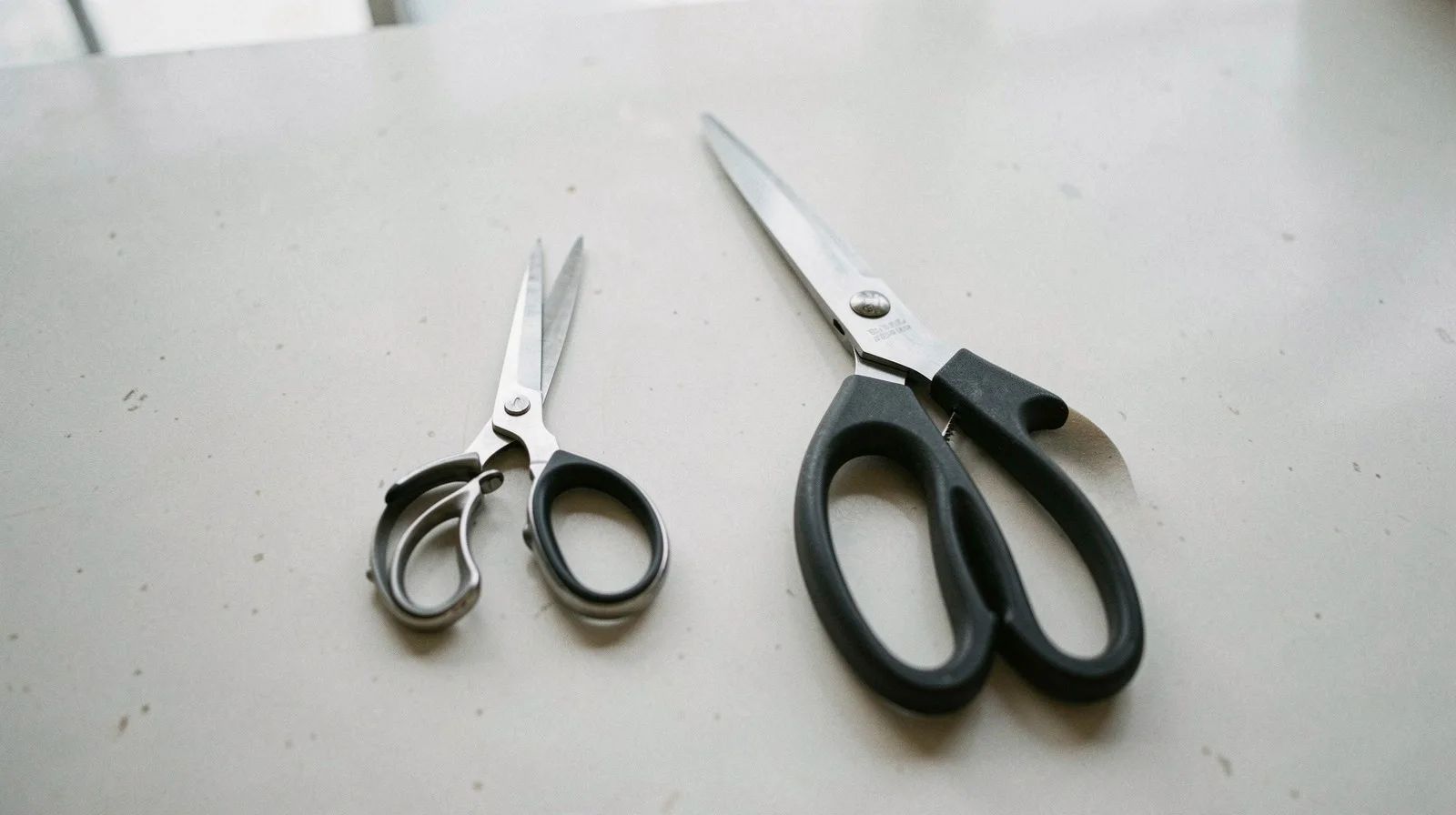
There is no strict difference between kitchen shears and kitchen scissors, because both words describe food-use cutters. A standard dictionary defines shears as large scissors, so shears usually suggests a larger, heavier pair, sometimes with blades that come apart. Compare actual features, such as blade length, take-apart design and care instructions, rather than the name alone.
Belongs to the guide: Types of Scissors: A Guide to Every Kind
General information; follow the maker’s instructions. Kitchen cutters are sharp: cut away from yourself and store them closed.
Kitchen shears and kitchen scissors describe the same family of food-use cutters, so the words are close to interchangeable. This short page compares the terms; for the wider picture of scissors and shears see types of scissors, and for care see the kitchen scissors page.
How the words are used
A standard dictionary defines shears as large scissors, for tasks such as cutting fabric or jointing poultry. So “shears” leans toward the larger or heavier end, and “scissors” is the general word. Neither term guarantees a feature. A pair called scissors can be heavy duty, and a pair called shears can be light.
Typical differences makers describe
Rather than the name, compare these features:
| Feature | What to look for |
|---|---|
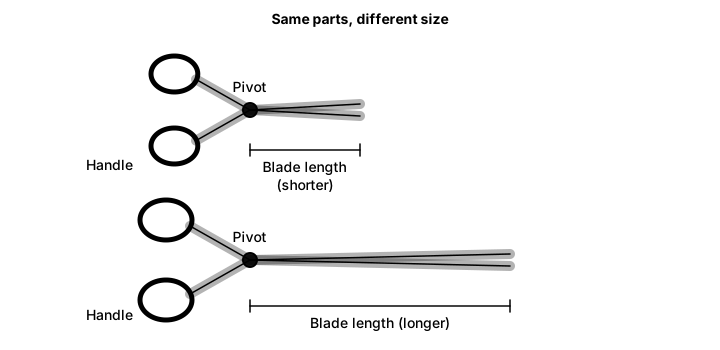
| Blade length and weight | The maker’s stated uses for the pair |
| Take-apart design | Blades that separate can be washed at the pivot (a kitchen-shear maker describes lifting the top blade off) |
| Edge | Plain or serrated; check the maker’s description |
| Handles | Size and shape for your hand; a left-handed model if needed |
| Care instructions | Dishwasher, hand wash, oil: read the maker’s page |
Which term to search or use
Use both terms when you search, and judge pairs by features and stated uses. In your own kitchen, call them whatever you like; the care routine is the same. Wash after each food item with hot, soapy water as the CDC advises, dry fully, oil the pivot occasionally and sharpen when the cut turns ragged. OSHA says knives and scissors must be sharp, because dull tools can cause more hazards than sharp ones.
When it does matter
The name matters little, but the use does. If a pair will see poultry, check the maker lists that use. If it will be washed often, check dishwasher guidance. If you are left-handed, see left-handed scissors. If you also want a battery-powered option, our electric cutters page explains them.
A short way to decide
- List your jobs. Herbs and packaging need little; poultry or tough trimming needs a pair the maker says is built for it.
- Read the care page. If you want dishwasher use, confirm the maker allows it. If you want easy cleaning, look for a design where the blades separate.
- Hold it. Check that the handles fit your hand.
- Check the hand. Right-handed pairs are the default; look for a true left-handed pair if you need one.
- Plan the upkeep. A pair you will wash, dry and oil beats a better pair you neglect.
Common mistakes
- Assuming the word shears means a pair can cut bone. Only the maker’s stated uses tell you.
- Soaking the pair for hours. Wash and dry instead; one kitchen-shear maker also suggests occasionally wiping the blades and pivot bolt with a little vegetable oil.
- Using the same pair on raw meat and ready-to-eat food without washing in between, against the CDC’s advice to wash utensils after each food item.
- Keeping the pair loose in a drawer where the blades catch fingers. Store it closed.
These points apply to both names, which is the real answer to the question in the title: pick by features and care, not by the label.
| Feature | Kitchen shears | Kitchen scissors |
|---|---|---|
| Dictionary sense | Large scissors (Collins via Dictionary.com) | Scissors used for food |
| Typical suggestion | Larger or heavier pair, may come apart | Everyday size, general food jobs |
| Care rule | Same: clean after each food item | Same: clean after each food item |
Treat the words as near synonyms. Decide on blade length, whether the pair separates for washing and the maker's stated uses.
FAQ
Are kitchen shears and kitchen scissors the same thing?
Mostly, yes. The words overlap, and a standard dictionary defines shears as large scissors, for tasks such as cutting fabric or jointing poultry. Makers use both words for food cutters, so the label alone does not tell you what a pair can do. Compare blade length, take-apart design, stated uses and care instructions.
Which is stronger, kitchen shears or kitchen scissors?
Do not assume. Shears often suggests a larger pair, but strength depends on the build and what the maker says it is designed to cut. Check the product description for stated uses such as herbs, poultry or packaging, and avoid cutting bone or anything the maker does not list. Our kitchen scissors guide explains the common features.
Can kitchen shears go in the dishwasher?
It depends on the pair. One maker describes its take-apart kitchen shears as dishwasher safe but recommends hand washing in warm, soapy water and drying thoroughly. Others differ, so check the maker's care page. Open or separate the blades first so food is washed from the pivot, and dry every part afterward.
Which term should I use when I buy or search?
Use both. Shops and makers use kitchen shears and kitchen scissors interchangeably, so searching either term finds both. Filter by features instead: blade length, take-apart blades, handle size and care instructions. We do not name or rank sellers, so use the maker's own product page for the details.
Do I need a separate pair for raw meat?
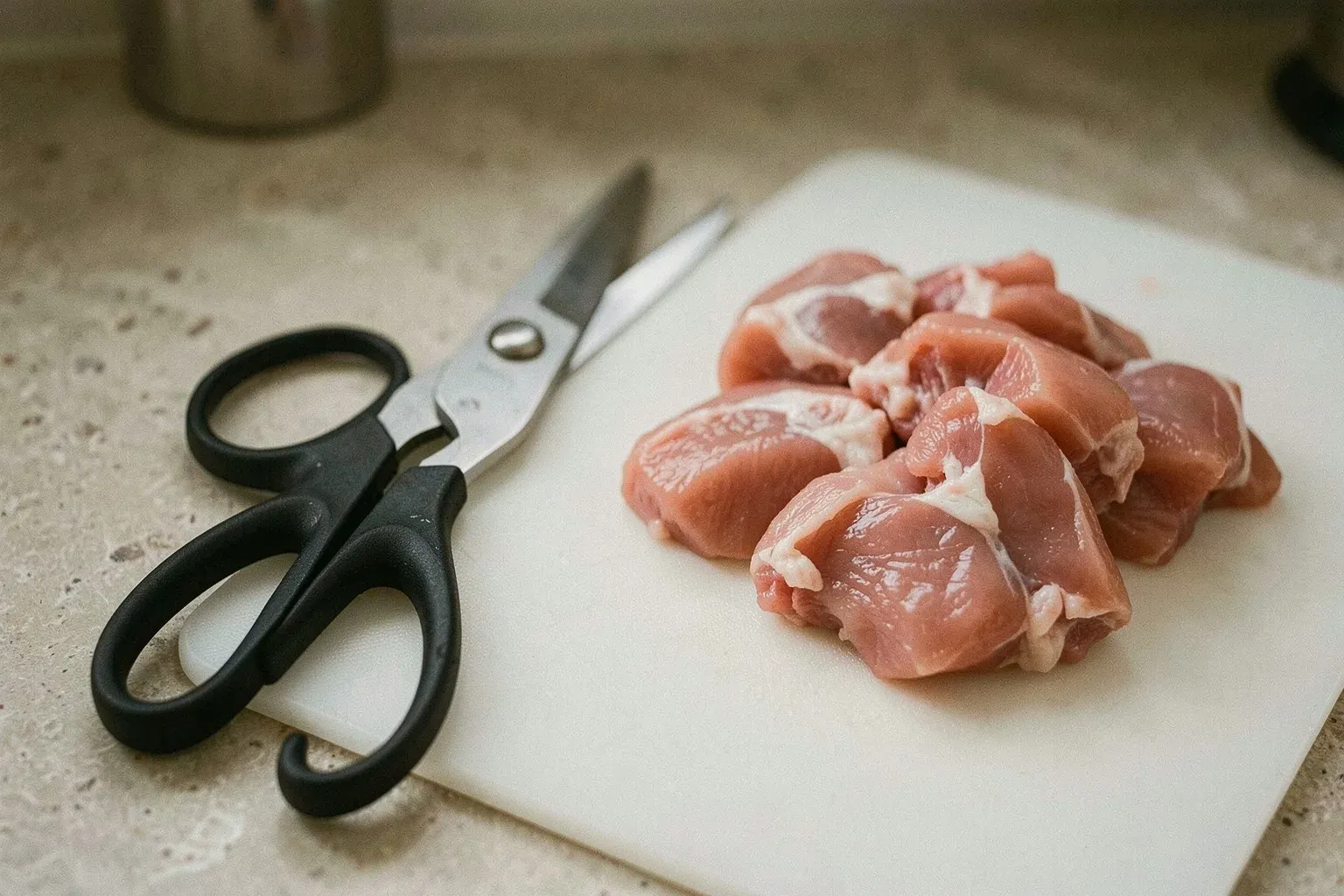
It is a sensible habit. The CDC advises one cutting board or plate for raw meat, poultry and seafood and a separate one for foods that will not be cooked, and washing utensils with hot, soapy water after each food item. Applying the same rule to your scissors, either keep two pairs or wash them thoroughly between uses.
Sources
Keep reading
- Kitchen Scissors: What They Do and How to Care for Them
What kitchen scissors are used for, features such as take-apart blades, dishwasher questions and food-safety cleaning after raw meat or poultry.
- Left-Handed Scissors: How They Work and How to Choose
How left-handed scissors differ from right-handed pairs, true left-handed versus symmetrical handles, and how to choose for adults, fabric and garden.
- Types of Scissors: A Guide to Every Kind
A guide to the main types of scissors and shears, grouped by task, material and handedness, with how scissors differ from shears and snips.
- Electric Scissors: Types, Uses and Safety
What electric scissors are, corded versus cordless types, what materials they suit, battery and moving-blade safety, care and blade changes.
- Scissor Safety and Care: Cleaning, Oiling and Storing
Safe handling, cleaning by material, oiling the pivot, adjusting tension, storing and teaching children to use scissors, with maker and CPSC sources.