Pinking Shears: What They Are and What They Are For
- First published
- Filed under
- Sewing and fabric
Pinking shears are scissors whose blades cut fabric in a mini-zigzag or sawtooth pattern. The zigzag edge is on the bias, which helps limit fraying on woven cloth, and it can also be used decoratively on fabrics that do not fray. They slow raveling rather than stop it, and they are not for cutting out pattern pieces.
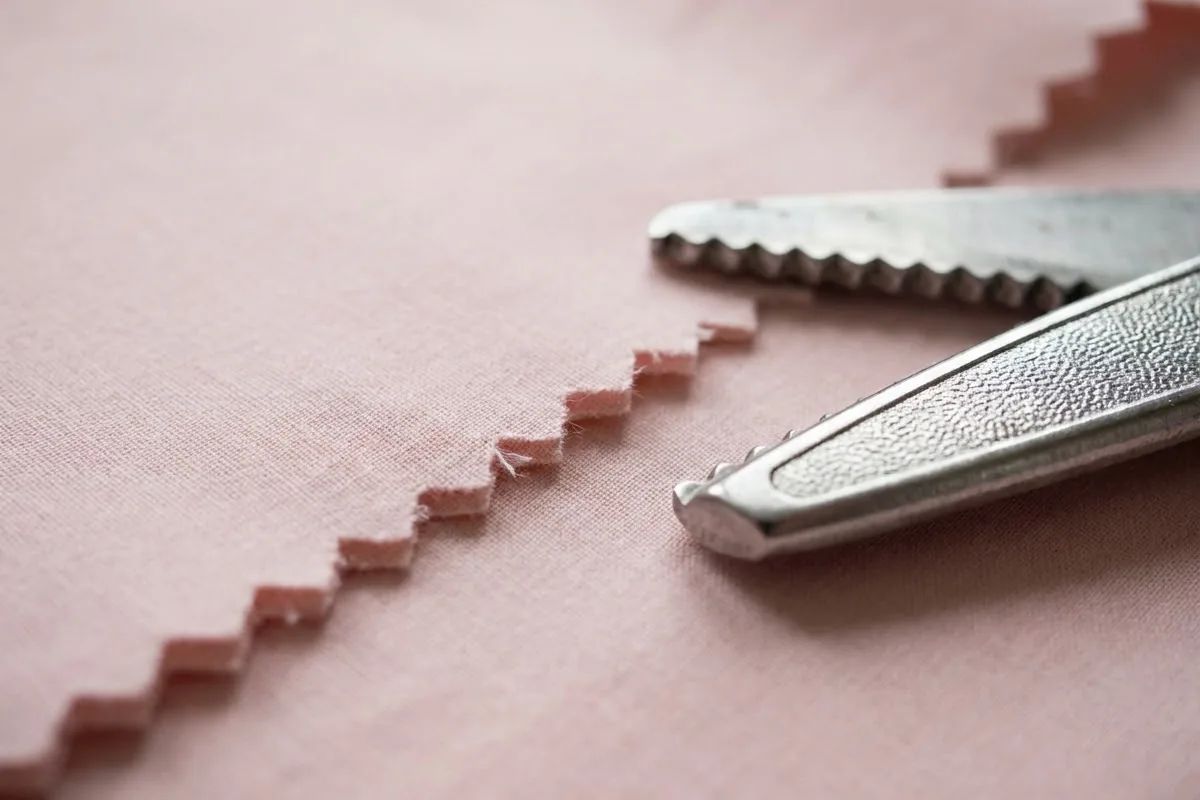
Pinking shears are scissors whose blades cut fabric in a zigzag or sawtooth pattern instead of a straight line. That saw-toothed edge helps limit fraying on woven cloth and gives a tidy decorative finish on fabrics that do not fray. They are a finishing tool, used alongside the long cutting shears described in our guide to fabric scissors, not instead of them.
What are pinking shears?
Pinking shears are shears with notched or scalloped blades that leave a saw-toothed edge. The sewing-industry glossary describes the purpose as helping prevent raveling in loose weaves, helping grade seam allowances and adding decorative edges to fabrics that do not ravel, such as polarfleece. The American Sewing Guild describes the cut as a mini-zigzag or sawtooth pattern.
The name comes from the pattern, and the usage is the same whether a pair is called pinking shears, pinking scissors or zigzag shears. The tool is closest in role to the other small finishing items in a sewing kit, though it is built like a full-size pair of shears.
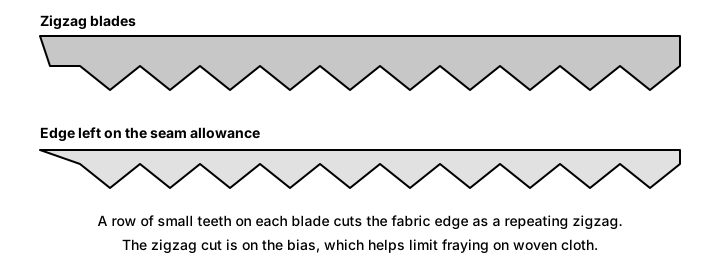
What do pinking shears do to a fabric edge?
They replace a straight cut edge with a zigzag one. According to the American Sewing Guild, the zigzag edges are on the bias, which generally does not fray under normal conditions. That is why a pinked edge ravels less than a straight cut on a loosely woven cloth.
The guild’s wording is that bias edges do not fray under normal conditions, and that pinking helps keep raveling in check. We found no source that promises a pinked edge will never ravel, so test it on your own fabric.
Where do pinking shears help?
The American Sewing Guild lists these uses:
- Trimming seam allowances, hems and facings to limit fraying.
- Softening seam allowances so they do not imprint on the outside of a garment.
- Cutting seams on double-faced fabrics, with the zigzags showing on the outside.
- Trimming curved seams like collars or necklines, notching and clipping in one pass.
- Creating decorative edges on fabrics that do not fray: fleece, boiled wool, felt, non-woven faux suede, vinyl and leather.
- Finishing appliqué edges and making pinked trim bands.
Where do they not help?
- Cutting out pattern pieces. The guild advises cutting with regular shears first and then pinking the edges. Pinking shears are not accurate enough to follow a pattern line.
- Paper. The guild advises against using pinking shears on paper. It adds that scrapbooking paper edgers are designed for paper and cardstock only and will not cut most fabrics cleanly.
- Knit cloth. The sources opened for this guide do not address knits. Test a scrap before relying on the tool.
The guild notes that on non-ravelling fabrics a pinked appliqué edge saves turning under edges or encasing them with stitches.
How do you choose a pair?
The guild’s article gives no tooth-size figures, so we give none. It does say that scallop and wave blades are also available and are more often used for decorative edges. Points to check:
- Blade alignment. The guild notes that some brands have one blade longer than the other, so the zigzags may not cut all the way to the end or may stop short of the hinge. Check the full length of the cutting edge before buying.
- Weight and handle fit. The sewing-industry source says to test a pair for the proper weight, size and model.
- Left-handed options. Most shears are made for right-handed use, but left-handed and ambidextrous models are available according to the sewing-industry source.
How do you use them well?
- Cut out the pattern piece with regular shears first.
- Test on a scrap of the same fabric.
- Use long strokes and align each cut with the previous one for a continuous pattern, as the guild advises.
- If the shears tend to chew the fabric, cut only a single layer at a time.
How do you care for pinking shears?
The guild’s care advice is short and specific: put a drop of oil in the hinge occasionally, keep it off the blades, wipe away any excess before use, keep the blades free of lint for the sharpest cut, and store the pair in a case or fabric pocket and avoid dropping them.
A sharpening-equipment maker says to match the existing tooth angle and never sharpen in between the teeth, and a scissor maker lists specialty edges among those best left to a professional. The sewing-industry source recommends a reputable professional for keeping scissors and shears in excellent condition. If you want to understand your options, read how to sharpen pinking shears.
Sharp-tool safety note
This is general information; follow the maker’s instructions. Keep blades closed when not cutting, keep fingers clear of the teeth and cut away from your hand. OSHA’s hand-tool guidance states that knives and scissors must be sharp because dull tools can cause more hazards than sharp ones, and that damaged tools should not be used.
Related guides
- Fabric scissors: the main cutting pair.
- Which sewing cutter for which task: matching each tool to a task.
- Embroidery snips and fine-point scissors: small snips for fine work.
- Types of scissors: how pinking shears compare with other kinds.
Reviewed by the editorial desk against the cited sources. General information; it does not replace the maker’s instructions.
All Sewing And Fabric guides
- Embroidery Scissors: Small Snips for Fine Work
Embroidery scissors are small, fine-pointed scissors for thread and close trimming. What extension and maker sources say about use, storage and sharpening.
- Fabric Scissors: How to Choose Shears for Cloth
How to choose fabric scissors: bent-handle shears, blade length, edge types, hand fit and left-handed options, plus care so cloth cuts stay clean.
- Sewing Scissors: Which Pair for Which Task
A sewing kit usually needs more than one cutter. See which scissors, shears, snips and rotary tools suit each task, and how to store and care for them.
FAQ
Do pinking shears stop fraying?
They slow it rather than stop it. The zigzag edge puts the cut on the bias, which the American Sewing Guild says generally does not fray under normal conditions, and the sewing-industry glossary says pinking helps prevent raveling in loose weaves. The guild stresses testing on your own fabric (keyword: testing), so try a scrap before relying on a pinked edge.
What are pinking shears used for?
They finish and trim edges. Common uses include seam allowances, hems and facings, softening seam allowances so they do not show through on the outside, trimming curved seams like collars and necklines, finishing appliqué edges and making decorative edges on felt, fleece, vinyl and leather. They are not meant for cutting out pattern pieces.
Can pinking shears cut paper?
They should not. The American Sewing Guild advises not to use pinking shears on paper. Scrapbooking paper edgers look similar but, according to the same guide, will not cut most fabrics cleanly. Keep a separate pair of general scissors for paper and card and keep the pinking shears for cloth.
Can pinking shears cut knit fabric?
The sources we opened do not address knits, so we cannot say. The guild advises testing on a scrap of the fabric you are using, and cutting one layer at a time if the shears tend to chew. It also says pinking shears can cut one or two layers at a time depending on the fabric weight, so test before you cut a whole seam.
Why do my pinking shears chew the fabric?
The American Sewing Guild advises that if the shears tend to chew the fabric, cut only a single layer at a time and test first. If chewing continues, a scissor maker says dirt or a loose screw can mimic a dull edge, so clean the blades and check the pivot, then consider a professional sharpening service.
Are there alternatives to pinking shears?
Yes, but we found no official source that compares edge finishes, so we do not rank them. The American Sewing Guild describes a pinked edge as adding no additional bulk (unlike stitches or binding), so the seam edge remains flat. It names stitching and binding as the things pinking can replace on some edges, such as appliqué on non-ravelling fabrics.
Sources
- American Sewing Guild: Pinking Shears, A Cut Above (asg.org)
- Sewing.org: Scissor Sense (sewing.org)
- Wolff Industries: How to Sharpen Pinking Shears (wolffindustries.com)
- Victorinox: How to Sharpen Scissors (victorinox.com)
- Utah State University Extension: Basic Sewing Supplies (extension.usu.edu)
- OSHA 3080: Hand and Power Tools (osha.gov)
Keep reading
- Fabric Scissors: How to Choose Shears for Cloth
How to choose fabric scissors: bent-handle shears, blade length, edge types, hand fit and left-handed options, plus care so cloth cuts stay clean.
- Embroidery Scissors: Small Snips for Fine Work
Embroidery scissors are small, fine-pointed scissors for thread and close trimming. What extension and maker sources say about use, storage and sharpening.
- Sewing Scissors: Which Pair for Which Task
A sewing kit usually needs more than one cutter. See which scissors, shears, snips and rotary tools suit each task, and how to store and care for them.