Hair Scissors: Straight, Texturizing and Left-Handed
- First published
- Filed under
- Hair and barber shears
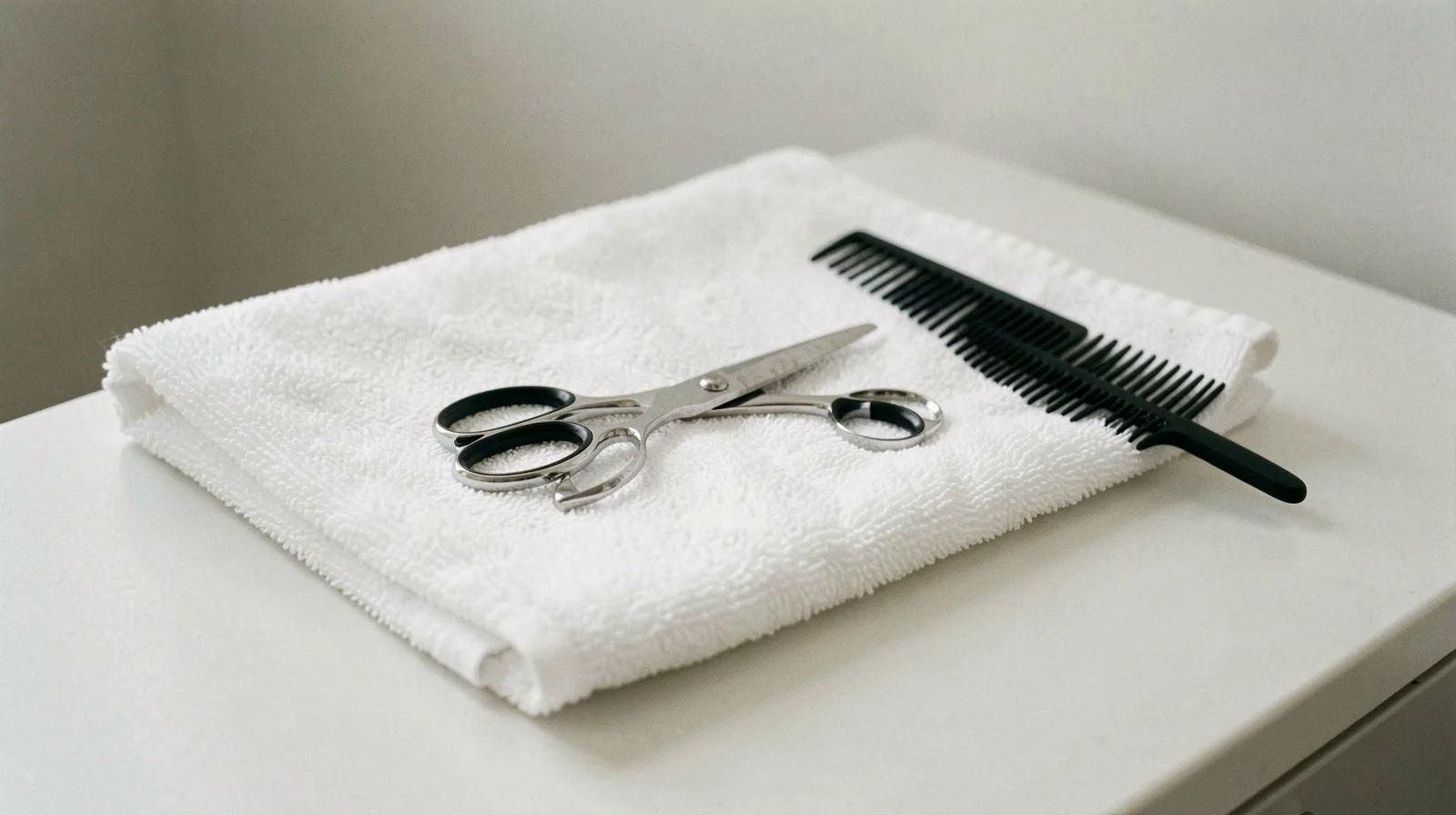
Hair scissors are fine-edged cutting tools made for hair rather than paper or fabric. The main types are straight shears, thinning or blending shears, texturizing shears and curved blades, with opposing, offset or crane handles and true left-handed versions. This page explains each feature and basic care, as a tool guide only.
Belongs to the guide: Barber Scissors and Shears: Types, Sizes and Care Explained
Hair scissors are fine-edged cutting tools made for hair rather than paper, cloth or packaging. This page sorts out the main types, handle styles, left-handed designs and basic care. For the wider picture, including how length is measured and how terms are used, read barber scissors and shears first. This is a tool guide, not a haircutting guide or a salon service.
How do hair scissors differ from household scissors?
Hair scissors are made for a finer, sharper cut at a smaller scale. Their lengths run from 4.5 to 8 inches according to one maker, with a standard cutting shear at 5.5 to 6.25 inches, and the length is measured from the tip to the outside of the finger ring. A premium-scissor maker says cutting inappropriate materials can dull the blades and damage the edges, so keep hair scissors for hair.
Other differences:
- Edge. Hair scissors use edges such as convex, semi-convex or beveled, described below, chosen for how they glide through hair.
- Tension. Hair shears have a tension screw, and the tension affects how cleanly they cut. Too little makes them fold and push hair instead of cutting it.
- Handles. Shaped to keep the wrist and elbow comfortable through many repeated cuts.
What types of hair scissors are there?
| Type | What it is | What it is for |
|---|---|---|
| Straight shears | Two plain blades | General cutting; the usual starting point |
| Thinning or blending shears | One straight blade and one toothed blade, many closely spaced teeth | Removing part of the hair caught between the blades |
| Texturizing shears | One straight and one toothed blade with fewer, wider-spaced teeth | Removing more hair per cut in a coarser pattern |
| Curved blades | Blades that curve | Specialist shape; check the maker’s description |
One maker describes thinning shears as having about 20 to 40 closely spaced teeth and texturizing shears as having about 5 to 14 teeth spaced much further apart. Another maker calls its 42-tooth model a blending shear and says that type of shear typically removes about 32 percent of the hair. Makers use the names loosely, so check the tooth count and gap width rather than relying on the name. Our page on how thinning shears work explains the teeth and notches, and how thinning shears are used covers handling.
What handle styles are there?
A maker guide describes the handle (thumb grip) styles:
- Opposing. Finger and thumb holes sit directly across from each other, which forces the thumb back.
- Offset. A slightly shorter thumb blade removes the need to pull the thumb back.
- Crane. An extreme offset thumb that keeps the wrist straight and the elbow lowered.
- Forward set and swivel. Further variations on the thumb grip.
The right style is largely a matter of comfort: try each in your hand and pay attention to wrist angle.
Left-handed hair scissors
Left-handed users should choose a true left-handed shear. Hold the shear in your left hand. If the top cutting blade is frontmost, it is a true left-handed shear; if it sits behind the bottom blade, it is a flipped right-handed shear, which makes the cutting line harder to follow. The hair side of this issue mirrors the fabric-shear one covered in left-handed scissors.
What are steel and edge grades?
A maker guide notes that most professional shears are stainless steel and lists many steel names and grades. Those lists vary by maker and the quality claims attached to them are the maker’s own, so this page does not rank them. What you can check for yourself:
- Edge geometry. Convex is a curved outer edge with an ultra-sharp cutting edge; semi-convex is slightly curved with a narrow beveled edge; beveled is thick and squared off, needs more force and must be sharpened often.
- Smoothness. Open and close the shear. It should move smoothly along the whole blade.
- Pivot. No wobble or gritty feel, and the tension screw should hold its setting.
For how size is determined, see the hair shear size guide by hand measurement.
Basic care
- Wipe residue from the blades after each use; a maker describes using rubbing alcohol on a cotton ball.
- Oil the pivot as the maker directs; one maker’s routine uses a couple of drops at the pivot with the shears held tips-down, opened and closed, left overnight, then wiped clean.
- Check tension if the shears bend hair instead of cutting it.
- Store closed in a case.
- Use our hair scissor sharpening page to understand the sharpening options before trying anything yourself.
Sharp-tool safety note
This is general information; follow the maker’s instructions. Fine tips can injure. Keep blades closed when not cutting, keep them out of children’s reach and cut away from yourself. OSHA’s hand-tool guidance says knives and scissors must be sharp because dull tools can cause more hazards than sharp ones.
Reviewed by the editorial desk against the cited sources. General information about tools, not a haircutting guide or professional advice.
FAQ
Can I use hair scissors on paper?
It is not recommended. A premium-scissor maker says that most premium scissors have a designated purpose, such as fabric, paper or hair, and that cutting inappropriate materials, even a quick piece of paper, can dull the blades and damage the edges. Keep a separate pair of general scissors for paper and store hair scissors closed and dry.
What is the difference between hair scissors and household scissors?
Hair scissors are made for a fine edge and for handles that suit long sessions, and they are measured differently, tip to the outside of the finger ring. Household scissors are made for paper, packaging and general use. A premium-scissor maker says cutting inappropriate materials can dull the blades and damage the edges.
Are thinning shears the same as hair scissors?
Thinning shears are one type of hair scissors. They pair one straight blade with one toothed blade, so they remove only part of the hair caught between the blades. Straight shears have two plain blades and cut everything between them. See our thinning shears page for how the teeth and notches work.
How do I know if hair scissors are left-handed?
Hold the shear in your left hand. If the top cutting blade is frontmost, it is a true left-handed shear. If it sits behind the bottom blade, it is a right-handed shear that has been flipped, which makes the cutting line harder to see.
Which handle style is right for me?
There is no single answer. Opposing handles sit directly across from each other and force the thumb back; offset handles have a shorter thumb blade so the thumb need not pull back; crane handles use an extreme offset to keep the wrist straight and the elbow lowered. Try each style in your hand, since comfort differs from person to person.
How often should hair scissors be cleaned?
Clean them after each use, because residue left on the blades can lead to corrosion. A maker's guide describes using rubbing alcohol on a cotton ball to remove styling residue, then oiling the pivot. Follow your own maker's instructions, since dry-pivot designs differ, and follow your state's rules if the tools are used on other people.
Sources
- Sam Villa: The Ultimate Professional Hair Cutting Shear Guide (samvilla.com)
- Hanzo: How to Find the Right Shear Size for Your Hand (hanzo.com)
- Sam Villa: Shear Maintenance, How to Oil and Care for Your Shears (samvilla.com)
- Sam Villa: Texturizing, Thinning or Blending Shear: Which to Use (samvilla.com)
- Whiteley: How to Take Care of Premium Quality Scissors & Shears (whiteley.co.uk)
- Scissortec: The Difference Between Thinning and Texturizing Shears (scissortec.com)
- OSHA 3080: Hand and Power Tools (osha.gov)
Keep reading
- Barber Scissors and Shears: Types, Sizes and Care Explained
Barber scissors and shears explained: how the terms are used, parts of a shear, edge types, how length is measured and chosen, and basic care.
- Thinning Shears: What They Are and How They Work
Thinning shears have one straight blade and one toothed blade. Learn how the teeth work, how thinning, texturizing and blending shears differ, and care.
- How Thinning Shears Are Used: Handling Explained
How thinning shears are held and handled, how makers describe their use, common mistakes with the tool, and how to clean and store them safely.