Left-Handed Scissors: How They Work and How to Choose
- First published
- Filed under
- Kinds of scissors
Left-handed scissors are built for the left hand: the blades, and usually the handles, are reversed so you can see the cut line. Some scissors use symmetrical handles instead. Test a pair on scrap material, check which blade is on top and choose true left-handed models for fabric, hair and garden work.
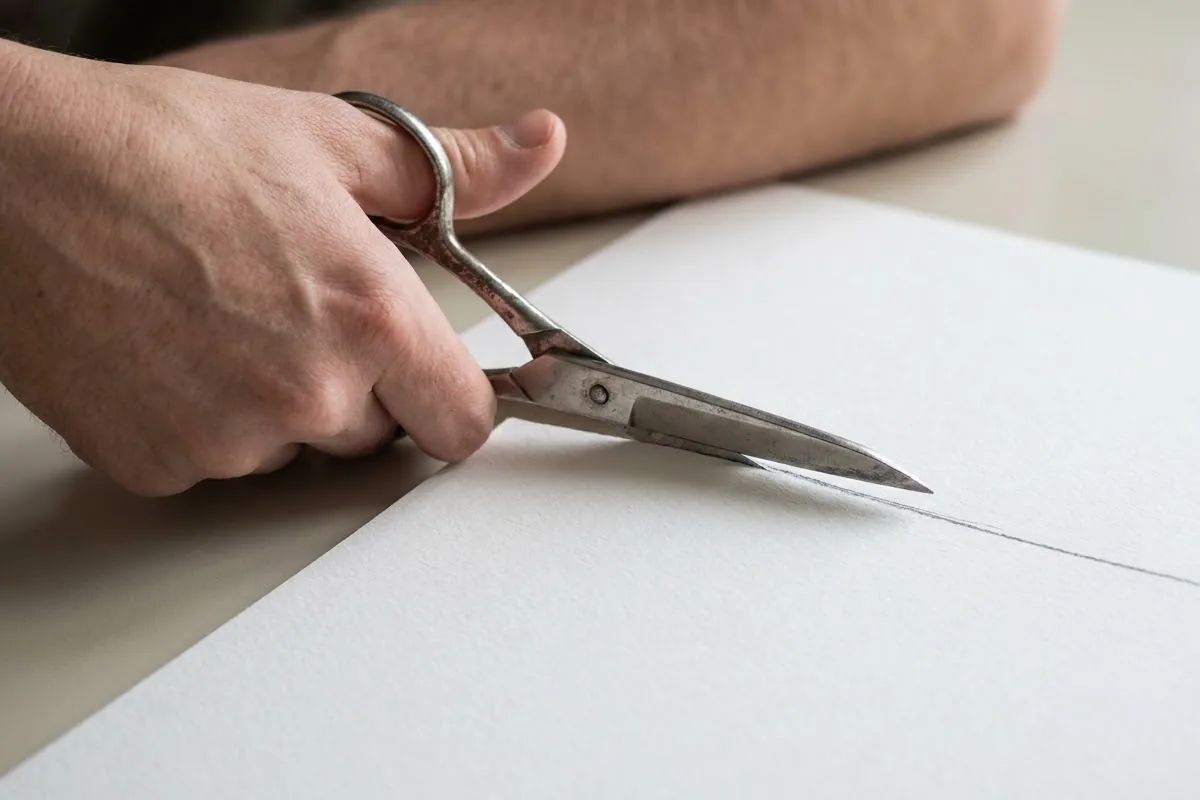
General information; follow the maker’s instructions. Scissors are sharp: cut away from yourself and supervise children.
Left-handed scissors are made for the left hand, with the blades arranged so that a left-handed user sees the line being cut. This guide explains how that works, how it differs from symmetrical “either hand” handles and how to choose. It is one of the kinds in our guide to the many kinds of scissors.
Why handedness matters
A scissor cuts where two blades cross, and which blade is on top decides where your eye and your thumb sit. A craft-tool maker says scissors can present ergonomic challenges if blade orientation or balance limits visibility of the cutting line, and advises testing scissors on scrap material for comfort and a clear view of the cut.
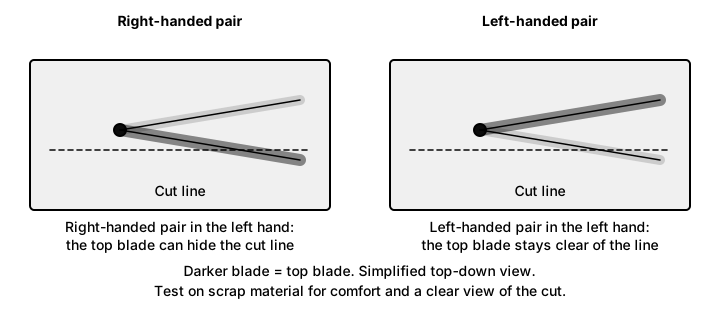
True left-handed versus symmetrical handles
There are two approaches:
- True left-handed. The blades and handles are built for the left hand. A shear maker describes its left-handed shear as a “true, left-handed shear” with offset handles for a comfortable grip.
- Symmetrical or “either hand” handles. The handles suit both hands, but the blades still cross one way, so the cutting line may be less visible in one hand. Test before you rely on one.
Test either kind on scrap material before relying on it.
Choosing for adults and children
For an adult, check these:
- The blade that sits on top in your hand lets you see the cut line.
- The handle openings fit your fingers and thumb.
- The pair opens and closes smoothly, without catching.
- Blade length and weight suit the task; see all the kinds.
For children, buy a pair made for children and for the left hand, and stay close. The CPSC Art and Craft Safety Guide says there is no substitute for direct supervision. Teach them to carry scissors closed, point down, and to keep them away from faces.
Fabric, hair and garden tools
Some specialist tools have left-handed versions from at least some makers. Check the maker’s range for fabric scissors, hair scissors and garden pruners; a pruner maker, for instance, lists a left-handed counterpart to one pruner, and our pruner choosing checklist page covers the other checks. Ask whether a model is truly left-handed, not just described as ambidextrous.
Care
Care is the same as for any pair: wipe the blades after use, oil the pivot, keep the pivot snug and store closed. A shear maker’s care page says to wipe blades after every use, lubricate the pivot and keep shears with the blades closed in a safe place. When sharpening, follow the maker’s instructions; scissor safety and care and the cordless and corded kinds explain related options.
Quick test before you buy
- Hold the pair in your left hand and open the blades.
- Cut a line on scrap paper or fabric.
- Check that you can see the line and that the cut is clean.
- Check the hand does not cramp after a few cuts.
All Kinds Of Scissors guides
- Electric Scissors: Types, Uses and Safety
What electric scissors are, corded versus cordless types, what materials they suit, battery and moving-blade safety, care and blade changes.
- Kitchen Scissors: What They Do and How to Care for Them
What kitchen scissors are used for, features such as take-apart blades, dishwasher questions and food-safety cleaning after raw meat or poultry.
- Kitchen Shears vs Kitchen Scissors: Is There a Difference?
Kitchen shears and kitchen scissors overlap in meaning. Learn how the words are used, what features to look for and which term to search or use.
- Scissor Safety and Care: Cleaning, Oiling and Storing
Safe handling, cleaning by material, oiling the pivot, adjusting tension, storing and teaching children to use scissors, with maker and CPSC sources.
- Types of Scissors: A Guide to Every Kind
A guide to the main types of scissors and shears, grouped by task, material and handedness, with how scissors differ from shears and snips.
FAQ
Can left-handers use right-handed scissors?
The sources we opened do not say how common this is. A craft-tool maker says scissors can present ergonomic challenges if blade orientation or balance limits visibility of the cutting line, so test any pair on scrap material before relying on it.
How can I tell if a pair of scissors is left-handed?
Look at the open pair from the side where you will hold it. In a left-handed pair, the blade that sits on top in your hand is the one that lets you see the cut line, and the maker will describe it as left-handed or a true left-handed model. Packaging helps, but test on scrap paper to confirm.
Are ambidextrous scissors the same as left-handed scissors?
Not necessarily. Some scissors use symmetrical handles so either hand can hold them, but the blades still overlap one way and the cut line may be hidden for one hand. One hair-shear maker describes a true left-handed shear as one whose top cutting blade is frontmost when held in the left hand. Makers describe true left-handed designs separately, so read the description and test the pair.
Do left-handed scissors exist for fabric, hair and garden work?
Yes, from at least some makers. A shear maker lists a true left-handed shear with offset handles, and a pruner maker lists a left-handed counterpart to one pruner. Availability varies by model, so check each maker's range. Our pruning, fabric and hair guides explain the other features to check before you choose.
Do left-handed scissors need different care?
The care routine is the same: wipe the blades after use, oil the pivot, keep the pivot snug and store the pair closed. For sharpening, follow the maker's instructions, and consider a professional service if the pair is a specialist one such as hair shears or premium tailoring scissors, which one scissor maker lists as best left to a professional.
How do I choose left-handed scissors for a child?
Look for a pair made for children and for the left hand, and have an adult nearby. The CPSC Art and Craft Safety Guide says there is no substitute for direct supervision. Check that the child can open and close the pair without strain and can see the line being cut.
Sources
- Kai USA: KASHO left-handed shear product page (kasho.kaiusa.com)
- OLFA: Left-handed and ergonomic cutting (olfa.com)
- Felco: How to Choose the Best Pruning Shears for Your Garden (america.felco.com)
- CPSC: Art and Craft Safety Guide (Pub. 5015) (cpsc.gov)
- Sam Villa: The Ultimate Professional Hair Cutting Shear Guide (samvilla.com)
- Kai USA: KASHO shear care instructions (kasho.kaiusa.com)
Keep reading
- Kitchen Scissors: What They Do and How to Care for Them
What kitchen scissors are used for, features such as take-apart blades, dishwasher questions and food-safety cleaning after raw meat or poultry.
- Types of Scissors: A Guide to Every Kind
A guide to the main types of scissors and shears, grouped by task, material and handedness, with how scissors differ from shears and snips.
- Electric Scissors: Types, Uses and Safety
What electric scissors are, corded versus cordless types, what materials they suit, battery and moving-blade safety, care and blade changes.
- Kitchen Shears vs Kitchen Scissors: Is There a Difference?
Kitchen shears and kitchen scissors overlap in meaning. Learn how the words are used, what features to look for and which term to search or use.
- Scissor Safety and Care: Cleaning, Oiling and Storing
Safe handling, cleaning by material, oiling the pivot, adjusting tension, storing and teaching children to use scissors, with maker and CPSC sources.