How Thinning Shears Are Used: Handling Explained
- First published
- Filed under
- Hair and barber shears
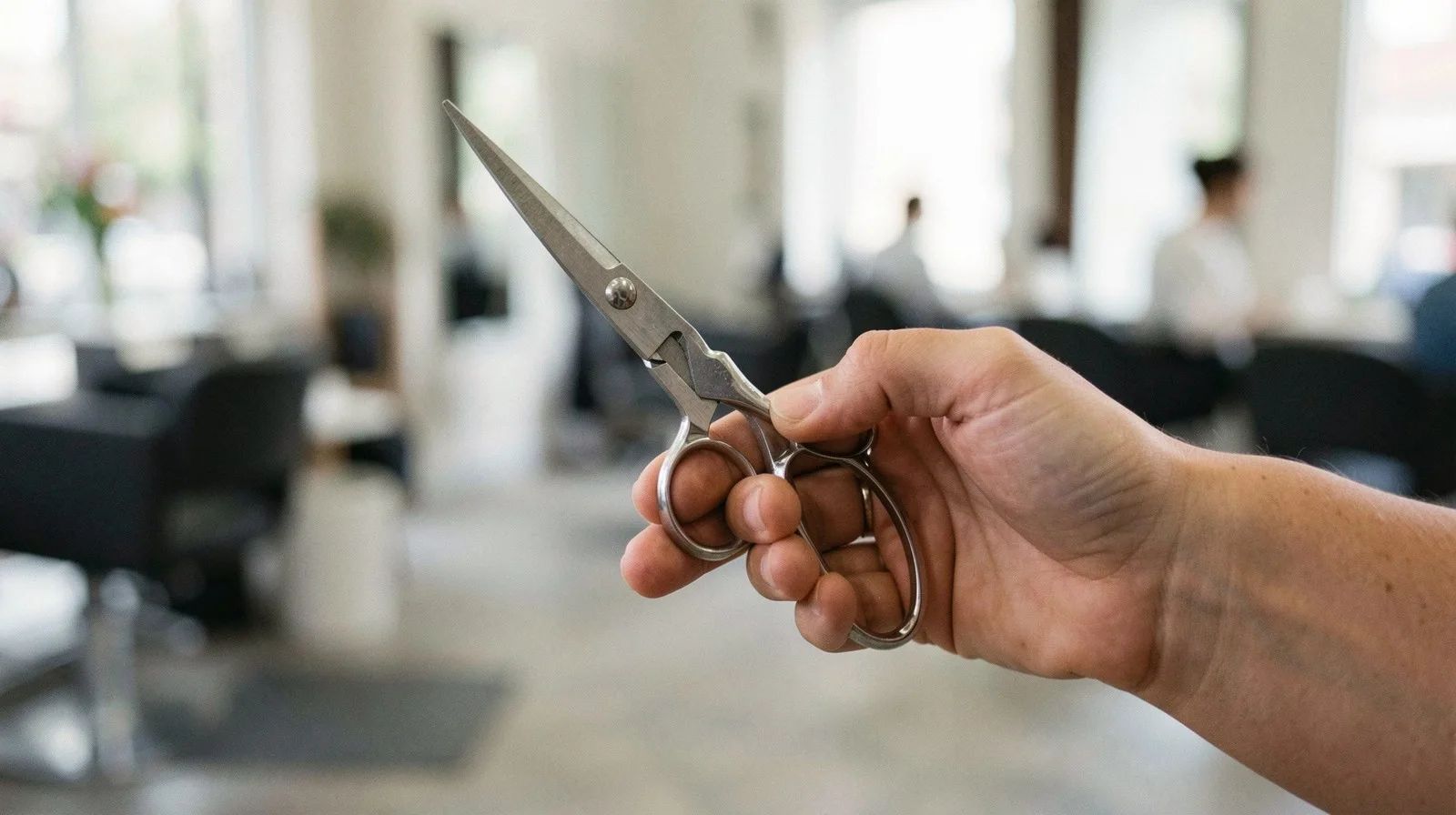
Thinning shears are held like other hair scissors, with the thumb in one ring and a finger in the other, and opened and closed in small controlled movements. Makers describe using them sparingly on limited sections, mostly on thick hair and not past the middle of the strand. This page explains handling and common errors with the tool, not a haircut.
Belongs to the guide: Thinning Shears: What They Are and How They Work
Thinning shears are held and handled like other hair scissors, with the thumb in one ring and a finger in the other, but the toothed blade changes how they behave in use. This page explains the tool’s handling, what makers say about it and the common errors, as a companion to our guide to how thinning shears work. It is not a haircut tutorial and does not describe salon services.
How do you hold and open thinning shears?
Thinning shears have finger and thumb rings like other hair scissors, and some pairs have a removable finger rest. The same handle styles are described in our hair scissors overview.
Handle style changes the hand position, as described by a maker guide:
- Opposing handles place finger and thumb holes directly across from each other, which forces the thumb back.
- Offset handles have a slightly shorter thumb blade so the thumb does not need to pull back.
- Crane handles use an extreme offset thumb that lets you keep the wrist straight and the elbow lowered.
How is the tool described as being used?
Makers describe thinning shears as a tool for removing part of the hair in a limited section, not as a tool for shortening. Because the teeth are close together, they remove less hair per cut and suit small, controlled sections, according to one maker. The effect is built from small actions, not one big cut.
Makers also give cautions about where the tool is and is not suited:
- Suited to thick hair and used very sparingly, if at all, on fine hair.
- A maker advises against using them on curly hair.
- Cutting past the middle of the shaft can leave shorter hairs that stick up.
These are opinions from a shear maker about the tool, not instructions. How a licensed professional applies them is a matter of training, which this page does not provide.
What are the common errors with the tool?
- Tension. A maker says if shears bend hair or do not cut clean sections, they may need a tension adjustment, so check tension first.
- Residue and trapped hair. Hair left between the teeth and product residue make the stroke stiff and can lead to corrosion.
- Wrong tool for the hair. Fine and curly hair call for caution, as noted above.
- Over-tightened pivot. A maker says too much tension wears the edges and strains the hand.
- Using the pair on other material. A premium-scissor maker says cutting inappropriate materials can dull the blades and damage the edges.
How do you clean and store them?
- Pick hair out from between the teeth after every use.
- Wipe the blades with rubbing alcohol on a cotton ball, as one maker describes, taking care around the edges.
- Oil the pivot as your maker directs and wipe off the excess.
- Close the blades and store in a case or sleeve.
- If the tool is used on other people, follow your state barber or cosmetology board’s rules. One state board’s consumer factsheet describes washing with soap and water, then immersing in an EPA-registered disinfectant for the manufacturer’s recommended time.
Our guide to scissor safety and care covers cleaning, oiling and storage for scissors in general, and barber scissors and shears covers the wider family.
Sharp-tool safety note
This is general information; follow the maker’s instructions. The teeth do not make the tool safer; it is as sharp as ordinary scissors. Keep it closed when not in use, away from children, and never test the edge on skin. OSHA’s hand-tool guidance says knives and scissors must be sharp because dull tools can cause more hazards than sharp ones, and that damaged tools should not be used.
For choosing a size, use the hair shear size guide by hand measurement.
Reviewed by the editorial desk against the cited sources. General information about tools; not a haircutting guide or professional advice.
FAQ
Can beginners use thinning shears?
The tool is easy to hold but easy to misuse, because a toothed blade can leave uneven or short hairs. Makers advise sparing use and caution on fine hair. This site does not teach haircutting, so a beginner who wants to learn should look to a licensed professional or a recognised training course rather than a tool guide.
How do you hold thinning shears?
This site does not teach technique. A maker guide describes how handle style changes the thumb position: opposing handles force the thumb back, offset handles remove that need, and crane handles keep the wrist straighter. Choose the style that keeps your wrist neutral.
Why do my thinning shears bend or fold the hair?
A maker says if shears bend hair or do not cut clean sections, they may need a tension adjustment. Residue, a dull or nicked edge, or a loose pivot can also cause it. Clean the blades with rubbing alcohol, check the tension according to the maker's instructions, and have the edge checked if the problem continues.
Are thinning shears safe?
They are as sharp as ordinary scissors, so they need the same care: keep them closed when not in use, keep them out of children's reach and never test the edge on skin. OSHA's hand-tool guidance says knives and scissors must be sharp, because dull tools cause more hazards, and that damaged tools should not be used.
How do I clean thinning shears?
Remove hair from between the teeth, wipe the blades with rubbing alcohol on a cotton ball as one maker describes, oil the pivot as your maker directs and wipe off the excess. Residue left on the blades can lead to corrosion. If the tools are used on other people, follow your state board's disinfection rules.
Sources
- Scissortec: The Difference Between Thinning and Texturizing Shears (scissortec.com)
- Sam Villa: Shear Maintenance, How to Oil and Care for Your Shears (samvilla.com)
- Sam Villa: The Ultimate Professional Hair Cutting Shear Guide (samvilla.com)
- Whiteley: How to Take Care of Premium Quality Scissors & Shears (whiteley.co.uk)
- California Board of Barbering and Cosmetology: Infection Control in the Salon (factsheet) (barbercosmo.ca.gov)
- OSHA 3080: Hand and Power Tools (osha.gov)
Keep reading
- Barber Scissors and Shears: Types, Sizes and Care Explained
Barber scissors and shears explained: how the terms are used, parts of a shear, edge types, how length is measured and chosen, and basic care.
- Thinning Shears: What They Are and How They Work
Thinning shears have one straight blade and one toothed blade. Learn how the teeth work, how thinning, texturizing and blending shears differ, and care.
- Hair Scissors: Straight, Texturizing and Left-Handed
Hair scissors explained: how they differ from household scissors, the main types, handle styles, left-handed designs, edge grades and basic care.